
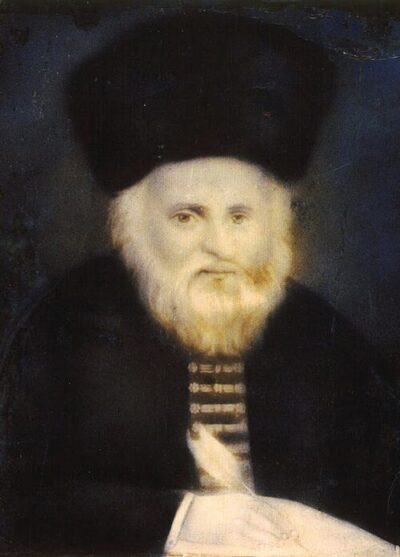
Gaon of Vilnius
Gaon of Vilnius was a Polish-Lithuanian rabbi and Talmudist. Born April 23, 1720, in Sialiec. Died October 9, 1797, in Vilnius.
Facts
13 facts · 2 confirmed by two sources · 3 cited · 8 from one source
Where this comes from
Papalocal keeps its own record. It started from these sources; what each one said is kept here as it was copied, so a change on their side never changes this page by itself. Tap one to read its version.
What Wikidata says · copied November 16, 2026 · revision 2553925806
- Described as
- Polish-Lithuanian rabbi and Talmudist (1720–1797)
- Other names
- Rabbi Eliyahu Kramer, Eliyahu ben Shelomoh Zalman, Elia Wilna, Gaon of Vilna, Elijah ben Solomon
- Born
- April 23, 1720 · 2 references
- Died
- October 9, 1797 · 2 references
- Born in
- Sialiec
- Died in
- Vilnius · 1 reference
- Buried in
- Šnipiškės Jewish Cemetery · 1 reference
- Citizen of
- Polish–Lithuanian Commonwealth; Russian Empire
- Occupation
- rabbi · 1 reference; Posek
- Field
- philosophy; Judaism · 1 reference
- Siblings
- Abraham Ragoler
- Religion
- Orthodox Judaism
- Wikipedias with a page
- 44
Wikidata item Q279359 (wikidata.org/wiki/Q279359), public domain (CC0). Copied November 16, 2026.
What Wikipedia says · copied November 16, 2026 · revision 1367763089
Elijah ben Solomon Zalman, (Hebrew: ר' אליהו בן שלמה זלמן Rabbi Eliyahu ben Shlomo Zalman), also known as the Vilna Gaon (Yiddish: דער װילנער גאון Der Vilner Goen; Polish: Gaon z Wilna, Gaon Wileński; or Elijah of Vilna; Sialiec, Polish–Lithuanian Commonwealth, April 23, 1720 – Vilnius, Russian Empire, October 9, 1797), was a Lithuanian Jewish talmudist, halakhist, kabbalist, and the foremost leader of misnagdic (non-hasidic) Jewry of the past few centuries.
He is commonly referred to or by his Hebrew acronym גר״א Gr״a Gaon Rabbenu Eliyahu "Our teacher Elijah the Genius", or in Modern Hebrew as ha-Gaon mi-Vilna "the genius from Vilnius".
Through his annotations and emendations of Talmudic and other texts, he became one of the most familiar and influential figures in rabbinic study since the Middle Ages. Although he is chronologically one of the Acharonim, some have considered him one of the Rishonim.
Large groups of people, including many yeshivas, uphold the minhag (set customs and rites) named after him, and which is also considered by many to be the prevailing minhag among Ashkenazi Jews in Jerusalem today.
Born in Sielec in the Brest Litovsk Voivodeship (now Syalyets, Belarus), the Gaon displayed extraordinary talent while still a child. By the time he was twenty years old, rabbis were submitting their most difficult halakhic problems to him for legal rulings. He was a prolific author, writing such works as glosses on the Babylonian Talmud and Shulchan Aruch known as Bi'urei ha-Gra "Elaborations by the Gra", a running commentary on the Mishnah, Shenoth Eliyahu "The Years of Elijah", and insights on the Torah entitled Adereth Eliyahu ("The Cloak of Elijah"), published by his son. Various Kabbalistic commentaries bear his name, and he wrote commentaries on the Book of Proverbs and other books of the Hebrew Bible later in life. None of his manuscripts was published in his lifetime.
When Hasidic Judaism became influential in his native town, the Vilna Gaon joined the Misnagdim, the rabbis and heads of Polish communities trying to curb Hasidic influence.
While he advocated studying branches of secular education such as mathematics to better understand rabbinic texts, he harshly condemned the study of philosophy and metaphysics.
- Born, in its opening lines
- April 23, 1720
- Died, in its opening lines
- October 9, 1797
From the Wikipedia article “Vilna Gaon” (en.wikipedia.org/wiki/Vilna_Gaon), by its contributors, under CC BY-SA 4.0 (creativecommons.org/licenses/by-sa/4.0/). Copied November 16, 2026; not changed.
Confirmed Two sources agree. Cited One source, and it names where it got it. One source One source, without a reference of its own. Sources disagree The sources disagree. We show the best-supported value and keep theirs below.
