
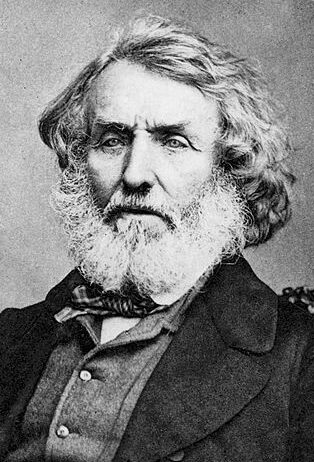
George Everest
George Everest was a Welsh surveyor and geographer. Born July 4, 1790, in Greenwich. Died December 1, 1866, in Westminster. Educated at Royal Military Academy, Woolwich. Awards include Gold Medal of the Royal Astronomical Society, Fellow of the Royal Geographical Society and Knight Bachelor.
Facts
25 facts · 2 confirmed by two sources · 9 cited · 14 from one source
Where this comes from
Papalocal keeps its own record. It started from these sources; what each one said is kept here as it was copied, so a change on their side never changes this page by itself. Tap one to read its version.
What Wikidata says · copied November 16, 2026 · revision 2546187794
- Described as
- Welsh surveyor and geographer (1790–1866)
- Other names
- Sir George Everest
- Born
- July 4, 1790 · 9 references
- Died
- December 1, 1866 · 9 references
- Born in
- Greenwich
- Died in
- Westminster · 3 references
- Buried in
- St Andrew's Church, Church Road, Hove
- Citizen of
- United Kingdom · 3 references
- Occupation
- explorer; geographer · 1 reference; surveyor · 1 reference; geodesist · 1 reference; cartographer · 1 reference
- Education
- Royal Military Academy, Woolwich
- Member of
- Royal Society of London (1827–); Royal Geographical Society
- Awards
- Gold Medal of the Royal Astronomical Society; Fellow of the Royal Geographical Society; Knight Bachelor; Fellow of the Royal Society
- Field
- geography · 1 reference; geodesy · 1 reference; cartography
- Siblings
- Robert Everest; Thomas Roupell Everest · 1 reference
- Military branch
- British Army
- Lived in
- Crickhowell
- Wikipedias with a page
- 55
Wikidata item Q217119 (wikidata.org/wiki/Q217119), public domain (CC0). Copied November 16, 2026.
What Wikipedia says · copied November 16, 2026 · revision 1378383847
Sir George Everest (, EEV-rist; 4 July 1790 – 1 December 1866) was a British surveyor and geographer who served as Surveyor General of India from 1830 to 1843.
After a military education, Everest joined the East India Company and arrived in India at the age of 16. He was eventually made an assistant to William Lambton on the Great Trigonometric Survey, and replaced Lambton as superintendent of the survey in 1823. Everest was largely responsible for surveying the meridian arc from the southernmost point of India north to Nepal, a distance of about 2,400 kilometres (1,500 mi), a task that took from 1806 to 1841 to complete. He was made Surveyor General of India in 1830, retiring in 1843 and returning to England.
In 1865, the Royal Geographical Society renamed Peak XV—at the time only recently identified as the world's highest peak—to Mount Everest in his honour. Andrew Scott Waugh, his protégé and successor as surveyor general, had been responsible for putting his name forward in 1856. Everest's name was used as a compromise due to the difficulty of choosing between multiple local names for the mountain. He initially objected to the honour, as he had had nothing to do with its discovery and believed his name was not easily written or pronounced in Hindi.
- Born, in its opening lines
- July 4, 1790
- Died, in its opening lines
- December 1, 1866
From the Wikipedia article “George Everest” (en.wikipedia.org/wiki/George_Everest), by its contributors, under CC BY-SA 4.0 (creativecommons.org/licenses/by-sa/4.0/). Copied November 16, 2026; not changed.
Confirmed Two sources agree. Cited One source, and it names where it got it. One source One source, without a reference of its own. Sources disagree The sources disagree. We show the best-supported value and keep theirs below.
