
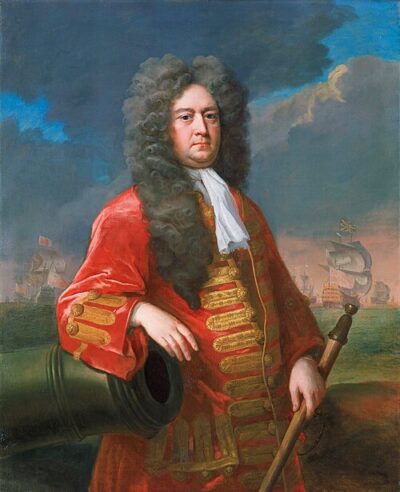
George Rooke
George Rooke was a Royal Navy admiral. Born 1650, in Canterbury. Died January 24, 1709, in Canterbury. Positions held include First Sea Lord (1699–1702), Member of Parliament in the Parliament of England and member of the 1st Parliament of Great Britain. Awards include Knight Bachelor.
Facts
23 facts · 2 confirmed by two sources · 2 cited · 19 from one source
Where this comes from
Papalocal keeps its own record. It started from these sources; what each one said is kept here as it was copied, so a change on their side never changes this page by itself. Tap one to read its version.
What Wikidata says · copied November 18, 2026 · revision 2568870941
- Described as
- Royal Navy admiral (1650-1709)
- Other names
- Sir George Rooke, Vice Admiral Sir George Rooke
- Born
- 1650 · 9 references
- Died
- January 24, 1709 · 2 references
- Born in
- Canterbury
- Died in
- Canterbury
- Citizen of
- Kingdom of Great Britain
- Occupation
- naval officer; politician; admiral · 1 reference; Conqueror · 1 reference
- Positions held
- First Sea Lord (1699–1702); Member of Parliament in the Parliament of England; member of the 1st Parliament of Great Britain; Member of the 1698-1700 Parliament; Member of the 1701 Parliament; Member of the 1701-02 Parliament; Member of the 1702-05 Parliament; Member of the 1705-07 Parliament
- Awards
- Knight Bachelor
- Spouse
- Catharine Knatchbull
- Military branch
- Royal Navy
- Military rank
- Admiral of the Fleet (1696–); vice admiral; captain (1673–)
- Wikipedias with a page
- 24
Wikidata item Q128983 (wikidata.org/wiki/Q128983), public domain (CC0). Copied November 18, 2026.
What Wikipedia says · copied November 18, 2026 · revision 1380561310
Admiral of the Fleet Sir George Rooke (1650 – 24 January 1709) was a Royal Navy officer and politician. As a junior officer he saw action at the Battle of Solebay and again at the Battle of Schooneveld during the Third Anglo-Dutch War. As a captain, he conveyed Prince William of Orange to England and took part in the Battle of Bantry Bay during the Williamite War in Ireland.
As a flag officer, Rooke commanded a division of the Royal Navy during their defeat at the Battle of Beachy Head. He also commanded a division at the Battle of Barfleur and distinguished himself at the Battle of La Hogue. He was later defeated while escorting a convoy at the Battle of Lagos.
Rooke commanded the unsuccessful allied expedition against Cádiz but on the passage home he destroyed the Spanish treasure fleet at the Battle of Vigo Bay in the opening stages of the War of the Spanish Succession. He also commanded the allied naval forces at the capture of Gibraltar and attacked the French fleet at the Battle of Málaga.
- Born, in its opening lines
- 1650
- Died, in its opening lines
- January 24, 1709
From the Wikipedia article “George Rooke” (en.wikipedia.org/wiki/George_Rooke), by its contributors, under CC BY-SA 4.0 (creativecommons.org/licenses/by-sa/4.0/). Copied November 18, 2026; not changed.
Confirmed Two sources agree. Cited One source, and it names where it got it. One source One source, without a reference of its own. Sources disagree The sources disagree. We show the best-supported value and keep theirs below.
