
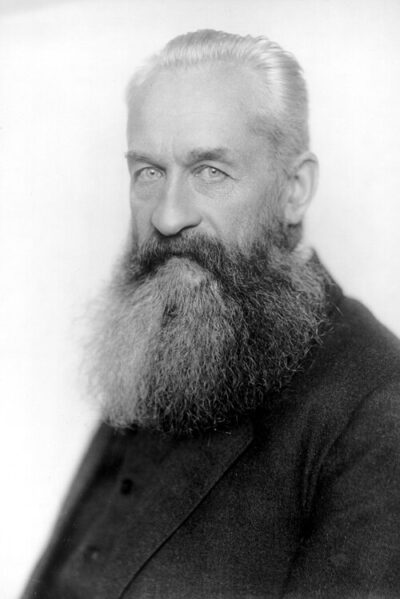
Georgy Lvov
Georgy Lvov was a Russian statesman and the first post-imperial prime minister of Russia. Born November 2, 1861, in Dresden. Died March 7, 1925, in Boulogne-Billancourt. Positions held include Member of the State Duma of the Russian Empire and Prime Minister of Russia (1917). Educated at Moscow State University, Faculty of Law and Polivanovskaia Gymnasium.
Facts
23 facts · 1 confirmed by two sources · 3 cited · 18 from one source · 1 where the sources disagree
What’s different
- Died: we show March 7, 1925 (Sources disagree). Wikipedia says March 8, 1925
Where this comes from
Papalocal keeps its own record. It started from these sources; what each one said is kept here as it was copied, so a change on their side never changes this page by itself. Tap one to read its version.
What Wikidata says · copied November 16, 2026 · revision 2563441874
- Described as
- Russian statesman and the first post-imperial prime minister of Russia (1861-1925)
- Other names
- Georgy Yevgenyevich Lvov
- Born
- November 2, 1861 · 2 references
- Died
- March 7, 1925 · 5 references
- Born in
- Dresden · 1 reference
- Died in
- Boulogne-Billancourt · 2 references
- Buried in
- Sainte-Geneviève-des-Bois Russian Cemetery
- Citizen of
- Russian Empire; Russian Republic
- Occupation
- statesperson; politician · 2 references
- Positions held
- Member of the State Duma of the Russian Empire; Prime Minister of Russia (1917)
- Political party
- Constitutional Democratic Party; Progressive Party · 1 reference
- Education
- Moscow State University, Faculty of Law; Polivanovskaia Gymnasium
- Member of
- Union of Liberation; All-Russian Zemstvo Union
- Spouse
- Yulia Bobrinskaya
- Father
- Yevgeny Lvov
- Mother
- Varvara Lvova
- Siblings
- Aleksey Lvov; Sergey Lvov; Vladimir Lvov
- Wikipedias with a page
- 55
Wikidata item Q297032 (wikidata.org/wiki/Q297032), public domain (CC0). Copied November 16, 2026.
What Wikipedia says · copied November 16, 2026 · revision 1384134125
Prince Georgy Yevgenyevich Lvov (2 November [O.S. 21 October] 1861 – 7/8 March 1925) was a Russian aristocrat, statesman and the first prime minister of the Russian Republic from 15 March to 20 July 1917. As Russia's de facto head of state, he led the Provisional Government after the February Revolution led to the suspension of the Russian monarchy.
A member of the Lvov princely family, Lvov was born in Dresden, Germany, and gained national fame for his relief work in the Russian Far East during the Russo-Japanese War. In 1906, he was elected to the First Duma as a member of the Constitutional Democratic Party. After the February Revolution, Lvov was made head of the Provisional Government and oversaw a number of liberal reforms. A series of political crises ultimately brought down his government, and in July 1917 he resigned as prime minister and was succeeded by his war minister, Alexander Kerensky. After the October Revolution, Lvov was arrested by the Bolsheviks, but later escaped to France by way of the United States. He settled in Paris and died in 1925.
- Born, in its opening lines
- November 2, 1861
- Died, in its opening lines
- March 8, 1925
From the Wikipedia article “Georgy Lvov” (en.wikipedia.org/wiki/Georgy_Lvov), by its contributors, under CC BY-SA 4.0 (creativecommons.org/licenses/by-sa/4.0/). Copied November 16, 2026; not changed.
Confirmed Two sources agree. Cited One source, and it names where it got it. One source One source, without a reference of its own. Sources disagree The sources disagree. We show the best-supported value and keep theirs below.
