
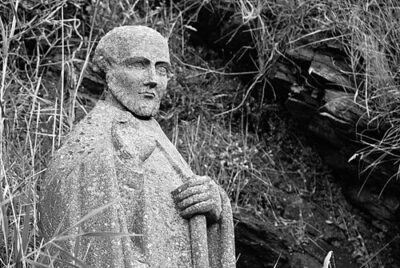
Gildas was the 6th-century British monk, writer and saint. Born 500, in Cheshire. Died January 29, 570, in Rhuys Peninsula. Positions held include abbot.
Facts
15 facts · 0 confirmed by two sources · 1 cited · 14 from one source
Where this comes from
Papalocal keeps its own record. It started from these sources; what each one said is kept here as it was copied, so a change on their side never changes this page by itself. Tap one to read its version.
What Wikidata says · copied November 16, 2026 · revision 2522318943
- Described as
- 6th-century British monk, writer and saint
- Other names
- Gildas the Wise
- Born
- 500 · 1 reference
- Died
- January 29, 570
- Born in
- Cheshire
- Died in
- Rhuys Peninsula
- Citizen of
- Kingdom of Strathclyde
- Occupation
- historian; writer · 1 reference; missionary; monk
- Positions held
- abbot
- Children
- Allgo; Saint Eigrad; Gwynog
- Father
- Caw
- Religion
- Catholic Church
- Wikipedias with a page
- 41
Wikidata item Q352995 (wikidata.org/wiki/Q352995), public domain (CC0). Copied November 16, 2026.
What Wikipedia says · copied November 16, 2026 · revision 1385557771
Gildas (English pronunciation: , Breton: Gweltaz; c. 450/500 – c. 570) – also known as Gildas Badonicus, Gildas fab Caw (in Middle Welsh texts and antiquarian works) and Gildas Sapiens (Gildas the Wise) – was a 6th-century British monk best known for his religious polemic De Excidio et Conquestu Britanniae, which recounts the history of the Britons before and during the coming of the Saxons. He is one of the best-documented figures of the Christian church in the British Isles during the sub-Roman period, and was renowned for his Biblical knowledge and literary style. In his later life, he emigrated to Brittany, where he founded a monastery known as Saint-Gildas-de-Rhuys.
From the Wikipedia article “Gildas” (en.wikipedia.org/wiki/Gildas), by its contributors, under CC BY-SA 4.0 (creativecommons.org/licenses/by-sa/4.0/). Copied November 16, 2026; not changed.
Confirmed Two sources agree. Cited One source, and it names where it got it. One source One source, without a reference of its own. Sources disagree The sources disagree. We show the best-supported value and keep theirs below.
