
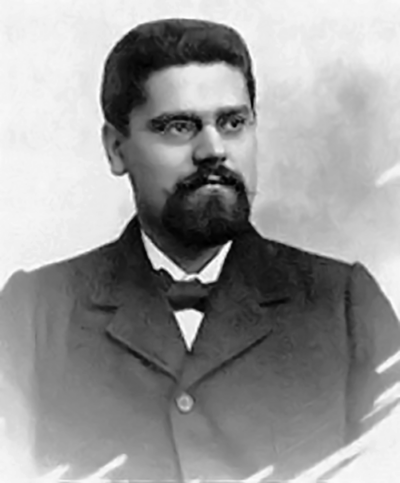
Giovanni Gentile
Giovanni Gentile was an Italian philosopher, educator, fascist theoretician and politician. Born May 29, 1875, in Castelvetrano. Died April 15, 1944, in Salviatino. Positions held include minister of Public Education of the Kingdom of Italy (1922–1924), Director of the Scuola Normale Superiore (1928–1943) and senator of the Kingdom of Italy. Educated at Liceo classico statale L. Ximenes and Scuola Normale Superiore. Classe di Lettere e Filosofia. Awards include Serena Medal, Gautieri Award and Order of the German Eagle.
Facts
41 facts · 2 confirmed by two sources · 15 cited · 24 from one source
Where this comes from
Papalocal keeps its own record. It started from these sources; what each one said is kept here as it was copied, so a change on their side never changes this page by itself. Tap one to read its version.
What Wikidata says · copied November 16, 2026 · revision 2566149427
- Described as
- Italian philosopher, educator, fascist theoretician and politician (1875-1944)
- Born
- May 29, 1875 · 4 references
- Died
- April 15, 1944 · 8 references
- Born in
- Castelvetrano · 5 references
- Died in
- Salviatino · 1 reference
- Buried in
- Basilica of Santa Croce
- Name at birth
- Giovanni Gentile · 1 reference
- Citizen of
- Kingdom of Italy
- Occupation
- philosopher · 1 reference; pedagogue; politician · 1 reference; university teacher · 1 reference; literary critic · 1 reference
- Positions held
- minister of Public Education of the Kingdom of Italy (1922–1924); Director of the Scuola Normale Superiore (1928–1943) · 1 reference; senator of the Kingdom of Italy
- Political party
- National Fascist Party
- Worked for
- Istituto comprensivo Campobasso "Mario Pagano" (1900–1902); University of Palermo (1906–1914); University of Pisa (1914–1919); Sapienza University of Rome (1917–1928) · 1 reference; Scuola Normale Superiore (1928–1944); Bocconi University (1934–1944)
- Education
- Liceo classico statale L. Ximenes (–1892); Scuola Normale Superiore. Classe di Lettere e Filosofia (1893–1897) · 1 reference; University of Florence (1899–1900)
- Member of
- Academy of Sciences of Turin (1914–) · 1 reference; Accademia della Crusca; Accademia Tiberina; Accademia Nazionale dei Lincei (1922–) · 1 reference; Royal Academy of Italy · 1 reference
- Awards
- Serena Medal (1928) · 1 reference; Gautieri Award (1897) · 1 reference; Order of the German Eagle (1940); Knight Grand Cross of the Order of Saints Maurice and Lazarus (1937); Knight grand cross of the order of the crown of Italy (1923)
- Field
- philosophy · 1 reference
- Spouse
- Erminia Nudi (1901–) · 1 reference
- Children
- Giovanni Gentile; Federico Gentile · 1 reference; Benedetto Gentile · 1 reference
- Father
- Benedetto Gentile
- Wikipedias with a page
- 50
Wikidata item Q312295 (wikidata.org/wiki/Q312295), public domain (CC0). Copied November 16, 2026.
What Wikipedia says · copied November 16, 2026 · revision 1383556336
Giovanni Gentile ( jen-TEE-lay; Italian: [dʒoˈvanni dʒenˈtiːle]; 29 May 1875 – 15 April 1944) was an Italian pedagogue, philosopher, and politician. He was one of the primary founders of fascism.
Born in Castelvetrano, Gentile graduated from the Scuola Normale Superiore and the University of Pisa. He, alongside Benedetto Croce, was a major exponent of Italian idealism in Italian philosophy, and also devised his own system of thought, which he called "actual idealism" or "actualism", which has been described as "the subjective extreme of the idealist tradition".
Described by himself and by Benito Mussolini as the "philosopher of fascism", he was influential in providing an intellectual foundation for Italian fascism, notably through writing the 1925 Manifesto of the Fascist Intellectuals, and part of the 1932 "The Doctrine of Fascism" with Mussolini. As Minister for Public Education, he introduced in 1923 the so-called Gentile Reform of the Italian educational system, the first major piece of legislation passed by the Fascist government, which would last in some capacity until 1962. He also helped found the Institute of the Italian Encyclopedia with Giovanni Treccani, and was its first editor.
Though his political influence waned as Mussolini sought the alliance of the Catholic Church in the late 1920s, which conflicted with Gentile's secularism, he remained a faithful Fascist, even after the 1943 armistice with the Allies, and followed Mussolini into the Italian Social Republic. He was assassinated in 1944 by partisans of the Italian resistance.
- Born, in its opening lines
- May 29, 1875
- Died, in its opening lines
- April 15, 1944
From the Wikipedia article “Giovanni Gentile” (en.wikipedia.org/wiki/Giovanni_Gentile), by its contributors, under CC BY-SA 4.0 (creativecommons.org/licenses/by-sa/4.0/). Copied November 16, 2026; not changed.
Confirmed Two sources agree. Cited One source, and it names where it got it. One source One source, without a reference of its own. Sources disagree The sources disagree. We show the best-supported value and keep theirs below.
