
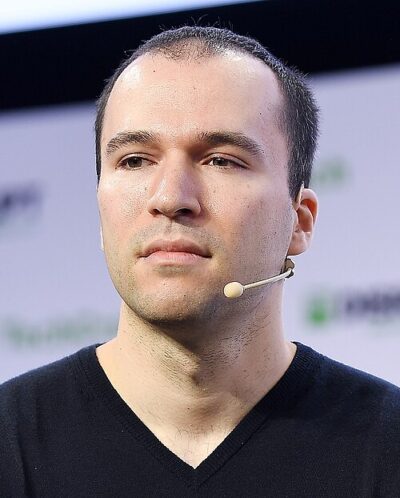
Greg Brockman
Greg Brockman is an American entrepreneur, investor, and software developer. Born November 29, 1987, in Thompson. Educated at Harvard University and Massachusetts Institute of Technology. Awards include Forbes 30 Under 30.
Facts
17 facts · 1 confirmed by two sources · 1 cited · 15 from one source
Where this comes from
Papalocal keeps its own record. It started from these sources; what each one said is kept here as it was copied, so a change on their side never changes this page by itself. Tap one to read its version.
What Wikidata says · copied November 15, 2026 · revision 2565821671
- Described as
- American entrepreneur, investor, and software developer
- Other names
- Brockman, Gregory Brockman
- Born
- November 29, 1987
- Born in
- Thompson
- Citizen of
- United States
- Occupation
- entrepreneur; investor; programmer; researcher
- Worked for
- OpenAI (2015–2023) · 2 references; Stripe (2010–2015)
- Education
- Harvard University (2008–2009); Massachusetts Institute of Technology (2009–2010); Red River High School; University of North Dakota
- Member of
- Dialog; Chaos Computer Club
- Awards
- Forbes 30 Under 30
- Website
- https://gregbrockman.com/
- Wikipedias with a page
- 26
Wikidata item Q100604534 (wikidata.org/wiki/Q100604534), public domain (CC0). Copied November 15, 2026.
What Wikipedia says · copied November 15, 2026 · revision 1382329335
Gregory Brockman (born November 29, 1987) is an American entrepreneur and software engineer. He is co-founder and president of OpenAI. He began his career at Stripe in 2010, upon leaving MIT, and became CTO in 2013. He left Stripe in 2015 to co-found OpenAI, where he also served as CTO.
- Born, in its opening lines
- November 29, 1987
From the Wikipedia article “Greg Brockman” (en.wikipedia.org/wiki/Greg_Brockman), by its contributors, under CC BY-SA 4.0 (creativecommons.org/licenses/by-sa/4.0/). Copied November 15, 2026; not changed.
Confirmed Two sources agree. Cited One source, and it names where it got it. One source One source, without a reference of its own. Sources disagree The sources disagree. We show the best-supported value and keep theirs below.
