
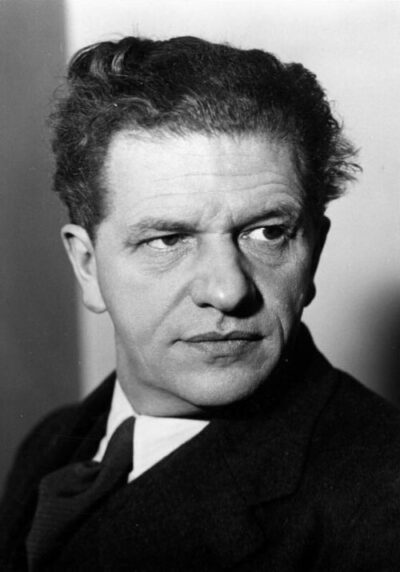
Hanns Johst
Hanns Johst was a German poet and playwright. Born July 8, 1890, in Seerhausen. Died November 23, 1978, in Ruhpolding. Awards include Goethe Medal for Art and Science.
Facts
17 facts · 2 confirmed by two sources · 10 cited · 5 from one source
Where this comes from
Papalocal keeps its own record. It started from these sources; what each one said is kept here as it was copied, so a change on their side never changes this page by itself. Tap one to read its version.
What Wikidata says · copied November 18, 2026 · revision 2568868571
- Described as
- German poet and playwright (1890–1978)
- Born
- July 8, 1890 · 8 references
- Died
- November 23, 1978 · 7 references
- Born in
- Seerhausen · 1 reference
- Died in
- Ruhpolding · 1 reference
- Citizen of
- Germany
- Occupation
- playwright · 1 reference; poet; writer · 1 reference; functionary · 1 reference; screenwriter · 1 reference; dramaturge · 1 reference; politician · 1 reference
- Political party
- Nazi Party (1932–) · 2 references
- Member of
- Militant League for German Culture; Schutzstaffel · 1 reference
- Awards
- Goethe Medal for Art and Science (1940)
- Military rank
- SS-Gruppenführer · 1 reference
- Wikipedias with a page
- 23
Wikidata item Q77484 (wikidata.org/wiki/Q77484), public domain (CC0). Copied November 18, 2026.
What Wikipedia says · copied November 18, 2026 · revision 1382294041
Hanns Johst (8 July 1890 – 23 November 1978) was a German poet and playwright, directly aligned with Nazi philosophy, as a member of the officially approved writers’ organisations in the Third Reich. The statement “When I hear the word culture, I reach for my gun”, variously misattributed to Heinrich Himmler, Joseph Goebbels and Hermann Göring, was in fact a corrupted version of a line in his play Schlageter.
- Born, in its opening lines
- July 8, 1890
- Died, in its opening lines
- November 23, 1978
From the Wikipedia article “Hanns Johst” (en.wikipedia.org/wiki/Hanns_Johst), by its contributors, under CC BY-SA 4.0 (creativecommons.org/licenses/by-sa/4.0/). Copied November 18, 2026; not changed.
Confirmed Two sources agree. Cited One source, and it names where it got it. One source One source, without a reference of its own. Sources disagree The sources disagree. We show the best-supported value and keep theirs below.
