
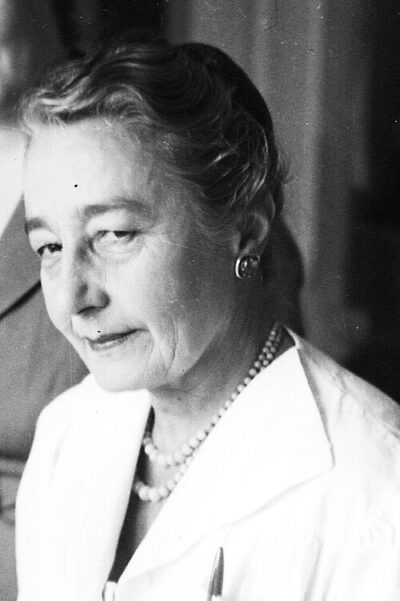
Hélène Sparrow
Hélène Sparrow was a Polish microbiologist and public health pioneer. Born June 5, 1891, in Bohuslav. Died November 13, 1970, in Corsica. Positions held include professor. Educated at University of Warsaw and Taras Shevchenko National University of Kyiv. Awards include 72 scientist women names on the Eiffel tower.
Facts
18 facts · 2 confirmed by two sources · 0 cited · 16 from one source
Where this comes from
Papalocal keeps its own record. It started from these sources; what each one said is kept here as it was copied, so a change on their side never changes this page by itself. Tap one to read its version.
What Wikidata says · copied November 18, 2026 · revision 2522149934
- Described as
- Polish microbiologist and public health pioneer (1891-1970)
- Born
- June 5, 1891 · 2 references
- Died
- November 13, 1970 · 3 references
- Born in
- Bohuslav
- Died in
- Corsica · 1 reference
- Citizen of
- France; Russian Empire; Poland
- Occupation
- academic; physician; head of laboratory; microbiologist · 1 reference; university teacher
- Positions held
- professor
- Worked for
- University of Warsaw
- Education
- University of Warsaw; Taras Shevchenko National University of Kyiv; Adam Mickiewicz University in Poznań · 1 reference
- Awards
- 72 scientist women names on the Eiffel tower
- Wikipedias with a page
- 22
Wikidata item Q17012619 (wikidata.org/wiki/Q17012619), public domain (CC0). Copied November 18, 2026.
What Wikipedia says · copied November 18, 2026 · revision 1363300251
Hélène Sparrow (5 June 1891 – 13 November 1970), was a Polish medical doctor and bacteriologist. She helped to control epidemics including: typhoid fever, cholera, dysentery, and smallpox. Throughout the 1920s, Sparrow worked with the Polish Armed Forces at the State Institute of Hygiene in Warsaw. While at the State Institute of Hygiene, she produced the first vaccine against typhus and ran vaccination campaigns to control the spread of diphtheria and scarlet fever along the eastern frontiers of Poland. In 1933, Sparrow began to study flea-borne and louse-borne rickettsia diseases in Tunis, where she led her own department at the Pasteur Institute. In her later years, she expanded her studies to include Mexico and Guatemala where she developed a protective vaccine against typhus. She contributed significant research to the World Health Organization on relapsing fever in Ethiopia.
- Born, in its opening lines
- June 5, 1891
- Died, in its opening lines
- November 13, 1970
From the Wikipedia article “Hélène Sparrow” (en.wikipedia.org/wiki/Hélène_Sparrow), by its contributors, under CC BY-SA 4.0 (creativecommons.org/licenses/by-sa/4.0/). Copied November 18, 2026; not changed.
Confirmed Two sources agree. Cited One source, and it names where it got it. One source One source, without a reference of its own. Sources disagree The sources disagree. We show the best-supported value and keep theirs below.
