
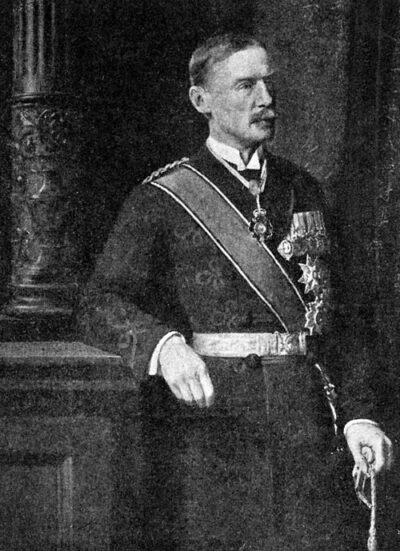
Henry McMahon
Henry McMahon was a British military officer, colonial official and diplomat. Born November 28, 1862, in Shimla. Died December 29, 1949, in London. Positions held include ambassador. Awards include Knight Grand Cross of the Royal Victorian Order, Knight Grand Cross of the Order of St Michael and St George and Knight of Justice of the Order of Saint John.
Facts
21 facts · 2 confirmed by two sources · 5 cited · 14 from one source
Where this comes from
Papalocal keeps its own record. It started from these sources; what each one said is kept here as it was copied, so a change on their side never changes this page by itself. Tap one to read its version.
What Wikidata says · copied November 18, 2026 · revision 2569058043
- Described as
- British military officer, colonial official and diplomat (1862–1949)
- Other names
- Sir Henry McMahon, A. Henry McMahon, Sir Vincent Arthur Henry McMahon, Arthur Henry McMahon, Vincent Arthur Henry McMahon, Sir Arthur Henry McMahon
- Born
- November 28, 1862 · 1 reference
- Died
- December 29, 1949 · 2 references
- Born in
- Shimla
- Died in
- London
- Name at birth
- Vincent Arthur Henry McMahon
- Citizen of
- United Kingdom
- Occupation
- diplomat; beamter · 1 reference; military officer · 1 reference; ship-owner · 1 reference
- Positions held
- ambassador
- Awards
- Knight Grand Cross of the Royal Victorian Order; Knight Grand Cross of the Order of St Michael and St George; Knight of Justice of the Order of Saint John; Knight Commander of the Order of the Indian Empire; Companion of the Order of the Star of India
- Spouse
- Mary Evelyn Bland (1887–) · 1 reference
- Father
- Charles McMahon · 1 reference
- Military branch
- British Indian Army
- Military rank
- Lieutenant Colonel; colonel · 1 reference
- Wikipedias with a page
- 23
Wikidata item Q27118 (wikidata.org/wiki/Q27118), public domain (CC0). Copied November 18, 2026.
What Wikipedia says · copied November 18, 2026 · revision 1374918698
Lieutenant Colonel Sir Vincent Arthur Henry McMahon (28 November 1862 – 29 December 1949) was a British Indian Army officer and diplomat who served as Foreign Secretary in the Government of India from 1911 to 1915 and as High Commissioner in Egypt from 1915 to 1917. As the Foreign Secretary McMahon conducted the tripartite negotiations between Tibet, China and Britain that led to the Simla Convention. Even though China did not in the end sign the Convention, the agreement governed the British relations with Tibet till 1947. In Egypt, McMahon was best known for the McMahon-Hussein Correspondence with Hussein bin Ali, Sharif of Mecca, and the Declaration to the Seven in response to a memorandum written by seven notable Syrians. After the Sykes-Picot Agreement was published by the Bolshevik Russian government in November 1917, McMahon resigned. He also features prominently in Seven Pillars of Wisdom, T.E. Lawrence's account of the Arab Revolt against the Ottoman Empire during World War I.
- Born, in its opening lines
- November 28, 1862
- Died, in its opening lines
- December 29, 1949
From the Wikipedia article “Henry McMahon” (en.wikipedia.org/wiki/Henry_McMahon), by its contributors, under CC BY-SA 4.0 (creativecommons.org/licenses/by-sa/4.0/). Copied November 18, 2026; not changed.
Confirmed Two sources agree. Cited One source, and it names where it got it. One source One source, without a reference of its own. Sources disagree The sources disagree. We show the best-supported value and keep theirs below.
