
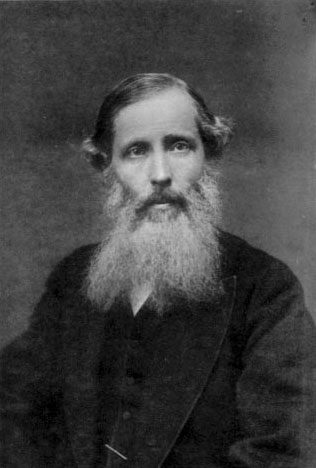
Henry Sidgwick
Henry Sidgwick was an English philosopher. Born May 31, 1838, in Skipton. Died August 28, 1900, in Terling. Educated at Trinity College and Rugby School.
Facts
22 facts · 2 confirmed by two sources · 11 cited · 9 from one source
Where this comes from
Papalocal keeps its own record. It started from these sources; what each one said is kept here as it was copied, so a change on their side never changes this page by itself. Tap one to read its version.
What Wikidata says · copied November 16, 2026 · revision 2527474088
- Described as
- English philosopher (1838–1900)
- Born
- May 31, 1838 · 8 references
- Died
- August 28, 1900 · 5 references
- Born in
- Skipton · 1 reference
- Died in
- Terling · 1 reference
- Buried in
- Terling (All Saints) Churchyard · 1 reference
- Citizen of
- United Kingdom of Great Britain and Ireland
- Occupation
- philosopher · 1 reference; economist; university teacher; writer · 1 reference
- Worked for
- University of Cambridge
- Education
- Trinity College; Rugby School
- Member of
- American Academy of Arts and Sciences
- Field
- philosophy
- Spouse
- Eleanor Mildred Sidgwick (1876–) · 3 references
- Father
- William Sidgwick · 2 references
- Mother
- Mary Crofts · 2 references
- Siblings
- Arthur Sidgwick · 1 reference; William Carr Sidgwick · 1 reference; Mary Benson · 1 reference
- Religion
- Unitarianism
- Wikipedias with a page
- 39
Wikidata item Q433076 (wikidata.org/wiki/Q433076), public domain (CC0). Copied November 16, 2026.
What Wikipedia says · copied November 16, 2026 · revision 1379803848
Henry Sidgwick (; 31 May 1838 – 28 August 1900) was an English utilitarian philosopher and economist and is best known in philosophy for his utilitarian treatise The Methods of Ethics. His work in economics has also had a lasting influence.
He was the Knightbridge Professor of Moral Philosophy at the University of Cambridge from 1883 until his death. He was one of the founders and first president of the Society for Psychical Research and a member of the Metaphysical Society and promoted the higher education of women.
In 1875, with Millicent Garrett Fawcett, he co-founded Newnham College, a women-only constituent college of the University of Cambridge. It was the second Cambridge college to admit women, after Girton College.
In 1856 Sidgwick joined the Cambridge Apostles intellectual secret society.
- Born, in its opening lines
- May 31, 1838
- Died, in its opening lines
- August 28, 1900
From the Wikipedia article “Henry Sidgwick” (en.wikipedia.org/wiki/Henry_Sidgwick), by its contributors, under CC BY-SA 4.0 (creativecommons.org/licenses/by-sa/4.0/). Copied November 16, 2026; not changed.
Confirmed Two sources agree. Cited One source, and it names where it got it. One source One source, without a reference of its own. Sources disagree The sources disagree. We show the best-supported value and keep theirs below.
