
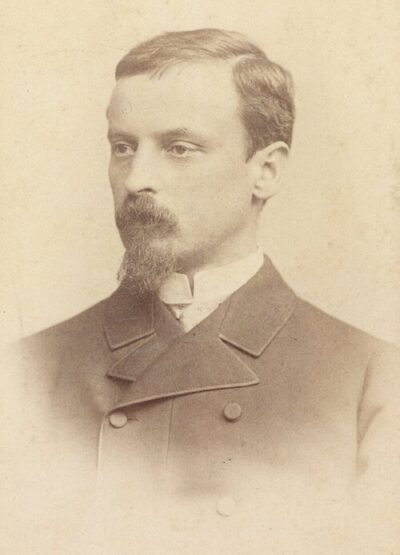
Henryk Sienkiewicz
Henryk Sienkiewicz was a Polish writer, novelist, journalist, philanthropist and Nobel Prize laureate. Born May 5, 1846, in Wola Okrzejska. Died November 15, 1916, in Vevey. Known for Janko Muzykant, With Fire and Sword and The Deluge. Educated at University of Warsaw. Awards include Nobel Prize in Literature and Knight of the Legion of Honour.
Facts
42 facts · 2 confirmed by two sources · 9 cited · 30 from one source · 1 where the sources disagree
What’s different
- Cause of death: we show cardiovascular disease (Sources disagree). Wikidata also lists aortic aneurysm
Where this comes from
Papalocal keeps its own record. It started from these sources; what each one said is kept here as it was copied, so a change on their side never changes this page by itself. Tap one to read its version.
What Wikidata says · copied November 16, 2026 · revision 2566150565
- Described as
- Polish writer, novelist, journalist, philanthropist and Nobel Prize laureate (1846–1916)
- Other names
- Litwos, Henryk Adam Aleksander Pius Sienkiewicz
- Born
- May 5, 1846 · 12 references
- Died
- November 15, 1916 · 12 references
- Born in
- Wola Okrzejska · 3 references
- Died in
- Vevey · 5 references
- Buried in
- St. John's Archcathedral
- Cause of death
- cardiovascular disease; aortic aneurysm
- Name at birth
- Henryk Adam Aleksander Pius Sienkiewicz · 1 reference
- Citizen of
- Russian Empire; Poland
- Occupation
- novelist; screenwriter · 1 reference; journalist · 1 reference; writer · 3 references; short story writer
- Education
- University of Warsaw
- Member of
- Serbian Academy of Sciences and Arts; Saint Petersburg Academy of Sciences; Russian Academy of Sciences; Polskie Towarzystwo Tatrzanskie · 1 reference; Academy of Learning · 1 reference
- Genre
- novella; reportage; short novel; feuilleton
- Known for
- Janko Muzykant; With Fire and Sword; The Deluge; Fire in the Steppe; Quo Vadis; The Knights of the Cross; In Desert and Wilderness
- Awards
- Nobel Prize in Literature (1905) · 2 references; Knight of the Legion of Honour
- Field
- fiction · 1 reference
- Spouse
- Maria Szetkiewicz (1881–1885) · 1 reference; Maria Romanowska-Wołodkowicz (1893–) · 1 reference; Maria Babska (1904–)
- Children
- Jadwiga Korniłowiczowa; Henryk Józef Sienkiewicz · 1 reference
- Siblings
- Aniela Sienkiewicz
- Religion
- Catholic Church; Catholicism · 1 reference
- Wikipedias with a page
- 140
Wikidata item Q41502 (wikidata.org/wiki/Q41502), public domain (CC0). Copied November 16, 2026.
What Wikipedia says · copied November 16, 2026 · revision 1383665307
Henryk Adam Aleksander Pius Sienkiewicz (US: shen-KYAY-vitch, -KYEV-itch; Polish: [ˈxɛnrɨk ˈadam alɛkˈsandɛr ˈpjus ɕɛnˈkʲɛvit͡ʂ]; 5 May 1846 – 15 November 1916), also known by the pseudonym Litwos (Polish: [ˈlitfɔs]), was a Polish epic writer. He is remembered for his historical novels, such as the Trilogy series and especially for his internationally known best-seller Quo Vadis (1895–1896).
Born into an impoverished Polish noble family in the Kingdom of Poland, at the time part of the Russian Empire, he began publishing journalistic and literary pieces in the late 1860s. In the late 1870s he traveled to the United States, sending back travel essays that won him popularity with Polish readers. In the 1880s he began serializing novels that further increased his popularity. He soon became one of the most popular Polish writers of the turn of the 19th and 20th centuries, and numerous translations gained him international renown, culminating in his receipt of the 1905 Nobel Prize in Literature for his "outstanding merits as an epic writer".
Many of his novels remain in print. In Poland he is known for his "Trilogy" of historical novels—With Fire and Sword, The Deluge, and Sir Michael—set in the 17th-century Polish–Lithuanian Commonwealth; internationally he is known for Quo Vadis, set in Nero's Rome. The Trilogy and Quo Vadis have been filmed, the latter several times, with Hollywood's 1951 version receiving the most international recognition.
- Born, in its opening lines
- May 5, 1846
- Died, in its opening lines
- November 15, 1916
From the Wikipedia article “Henryk Sienkiewicz” (en.wikipedia.org/wiki/Henryk_Sienkiewicz), by its contributors, under CC BY-SA 4.0 (creativecommons.org/licenses/by-sa/4.0/). Copied November 16, 2026; not changed.
Confirmed Two sources agree. Cited One source, and it names where it got it. One source One source, without a reference of its own. Sources disagree The sources disagree. We show the best-supported value and keep theirs below.
