
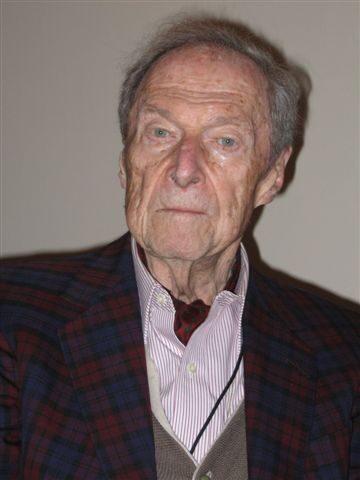
Hilary Koprowski
Hilary Koprowski was a Polish physician, virologist, immunologist and medical researcher. Born December 5, 1916, in Warsaw. Died April 11, 2013, in Philadelphia. Educated at Wydział Lekarski Uniwersytetu Warszawskiego and Chopin University of Music. Awards include Fulbright Scholarship, Order of the Smile and Officer of the Order of Polonia Restituta.
Facts
33 facts · 2 confirmed by two sources · 14 cited · 17 from one source
Where this comes from
Papalocal keeps its own record. It started from these sources; what each one said is kept here as it was copied, so a change on their side never changes this page by itself. Tap one to read its version.
What Wikidata says · copied November 15, 2026 · revision 2565565463
- Described as
- Polish physician, virologist, immunologist and medical researcher (1916–2013)
- Born
- December 5, 1916 · 5 references
- Died
- April 11, 2013 · 6 references
- Born in
- Warsaw · 1 reference
- Died in
- Philadelphia
- Cause of death
- pneumonia
- Citizen of
- United States; Poland
- Occupation
- virologist; immunologist; physician · 2 references; art collector · 1 reference; musician · 1 reference
- Worked for
- Thomas Jefferson University · 1 reference
- Education
- Wydział Lekarski Uniwersytetu Warszawskiego; Chopin University of Music · 1 reference; Accademia Nazionale di Santa Cecilia · 1 reference
- Member of
- National Academy of Sciences (1976–) · 1 reference; Polish Academy of Sciences (1991–) · 2 references; American Academy of Arts and Sciences (1974–) · 1 reference; Polish Biochemical Society · 1 reference; Croatian Academy of Sciences and Arts (1977–) · 1 reference
- Awards
- Fulbright Scholarship; Order of the Smile; Officer of the Order of Polonia Restituta (1994) · 1 reference; Commander with Star of the Order of Polonia Restituta (1998) · 1 reference; Grand Cross of the Order of Polonia Restituta (2007) · 1 reference; Andrzej Drawicz Award (2005) · 1 reference; Order of the White Eagle (2018); John Scott Award (1990) · 1 reference; Commander of the Order of the Lion of Finland · 1 reference; Albert B. Sabin Gold Medal (2007) · 1 reference
- Field
- immunology
- Spouse
- Irena Koprowska · 1 reference
- Wikipedias with a page
- 28
Wikidata item Q936389 (wikidata.org/wiki/Q936389), public domain (CC0). Copied November 15, 2026.
What Wikipedia says · copied November 15, 2026 · revision 1377220741
Hilary Koprowski (5 December 1916 – 11 April 2013) was a Polish virologist and immunologist. He was the first scientist to produce attenuated poliovirus and to conduct large-scale clinical research studies of an oral polio vaccine. His vaccine was used to immunize millions of children during trials in the Belgian Congo and Poland. He was the director of the Wistar Institute of Anatomy and Biology from 1957 to 1991 where he developed an improved rabies vaccine and pioneered the usage of monoclonal antibodies for cancer diagnosis and treatment. He was a professor of microbiology and immunology at the University of Pennsylvania and director of the Center of Neurovirology and Biotechnology Foundation Laboratories at Thomas Jefferson University. He co-founded the biotechnology firm Centocor in 1979.
He was accused in the oral polio vaccine AIDS hypothesis that HIV/AIDS originated from his oral polio vaccine studied in the Belgian Congo. This hypothesis was challenged and scientists have largely rejected it.
He received the Philadelphia Award in 1989; the Albert B. Sabin Gold Medal for his work in biomedical research in 2007; the John Scott Medal; and the Legion of Honour. Drexel University College of Medicine established the Hilary Koprowski Prize in Neurovirology in his honor. In 2018, Poland posthumously conferred the Order of the White Eagle upon Koprowski.
- Born, in its opening lines
- December 5, 1916
- Died, in its opening lines
- April 11, 2013
From the Wikipedia article “Hilary Koprowski” (en.wikipedia.org/wiki/Hilary_Koprowski), by its contributors, under CC BY-SA 4.0 (creativecommons.org/licenses/by-sa/4.0/). Copied November 15, 2026; not changed.
Confirmed Two sources agree. Cited One source, and it names where it got it. One source One source, without a reference of its own. Sources disagree The sources disagree. We show the best-supported value and keep theirs below.
