
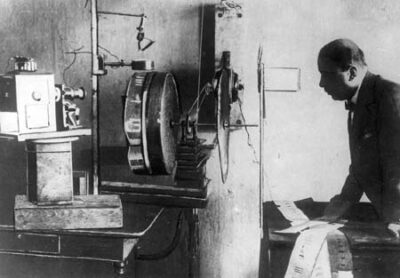
Hovannes Adamian
Hovannes Adamian was an Armenian inventor and engineer. Born February 5, 1879, in Baku. Died September 12, 1932, in Saint Petersburg. Educated at LMU Munich and University of Zurich.
Facts
14 facts · 2 confirmed by two sources · 8 cited · 4 from one source
Where this comes from
Papalocal keeps its own record. It started from these sources; what each one said is kept here as it was copied, so a change on their side never changes this page by itself. Tap one to read its version.
What Wikidata says · copied November 17, 2026 · revision 2568409027
- Described as
- Armenian inventor and engineer (1879–1932)
- Other names
- Johannes Adamian
- Born
- February 5, 1879 · 2 references
- Died
- September 12, 1932 · 3 references
- Born in
- Baku · 3 references
- Died in
- Saint Petersburg · 3 references
- Buried in
- Tokhmakh cemetery (1970–) · 2 references
- Citizen of
- Russian Empire; Soviet Union
- Occupation
- engineer · 2 references; inventor · 1 reference
- Education
- LMU Munich · 1 reference; University of Zurich · 1 reference; Humboldt-Universität zu Berlin · 1 reference
- Field
- color television
- Siblings
- Arshak Adamian
- Wikipedias with a page
- 25
Wikidata item Q2624768 (wikidata.org/wiki/Q2624768), public domain (CC0). Copied November 17, 2026.
What Wikipedia says · copied November 17, 2026 · revision 1332141347
Hovhannes (Ivan) Abgari Adamian (Russian: Ованес Абгарович Адамян, romanized: Ovanes Abgarovich Adamyan; Armenian: Հովհաննես Աբգարի Ադամյան; 5 February 1879 – 12 September 1932) was an Armenian and Soviet engineer. He was an author of more than 20 inventions. The first experimental color television, shown in London in 1928, was based on Adamian's tricolor principle, and he is recognized as one of the founders of color television.
- Born, in its opening lines
- February 5, 1879
- Died, in its opening lines
- September 12, 1932
From the Wikipedia article “Hovannes Adamian” (en.wikipedia.org/wiki/Hovannes_Adamian), by its contributors, under CC BY-SA 4.0 (creativecommons.org/licenses/by-sa/4.0/). Copied November 17, 2026; not changed.
Confirmed Two sources agree. Cited One source, and it names where it got it. One source One source, without a reference of its own. Sources disagree The sources disagree. We show the best-supported value and keep theirs below.
