
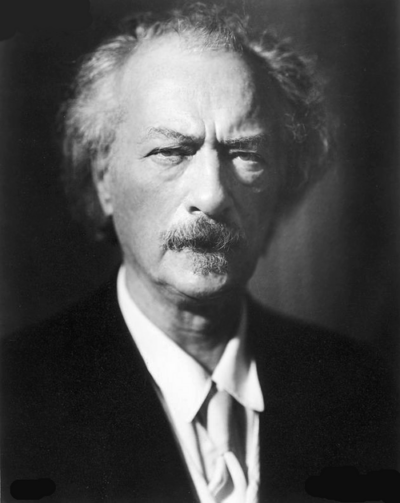
Ignacy Jan Paderewski
Ignacy Jan Paderewski was a Polish pianist, composer, supporter of Poland's independence movements, politician, Prime Minister of reborn Poland. Born November 18, 1860, in Kurilivka. Died June 29, 1941, in New York City. Positions held include Prime Minister of Poland (1919), National Council of Poland (1939–1941) and ambassador. Educated at Chopin University of Music. Awards include Grand Cross of the Legion of Honour, Knight Grand Cross of the Order of the British Empire and Order of the White Eagle.
Facts
45 facts · 1 confirmed by two sources · 10 cited · 32 from one source · 2 where the sources disagree
What’s different
- Born: we show November 18, 1860 (Sources disagree). Wikipedia says November 6, 1860
- Buried in: we show St. John's Archcathedral (Sources disagree). Wikidata also lists Arlington National Cemetery
Where this comes from
Papalocal keeps its own record. It started from these sources; what each one said is kept here as it was copied, so a change on their side never changes this page by itself. Tap one to read its version.
What Wikidata says · copied November 13, 2026 · revision 2568217225
- Described as
- Polish pianist, composer, supporter of Poland's independence movements, politician, Prime Minister of reborn Poland (1860–1941)
- Other names
- Ignacy Paderewski, Ignace Jan Paderewski
- Born
- November 18, 1860 · 11 references
- Died
- June 29, 1941 · 17 references
- Born in
- Kurilivka · 1 reference
- Died in
- New York City · 6 references
- Buried in
- St. John's Archcathedral; Arlington National Cemetery
- Cause of death
- pneumonia
- Name at birth
- Ignacy Jan Paderewski
- Citizen of
- Poland · 2 references; United States; United Kingdom · 1 reference
- Occupation
- politician · 2 references; pianist · 3 references; classical composer; diplomat; musicologist; music educator; composer · 3 references; head of government · 2 references
- Positions held
- Prime Minister of Poland (1919); National Council of Poland (1939–1941); ambassador; Minister of Foreign Affairs of Poland (1919)
- Political party
- Front Morges · 1 reference
- Education
- Chopin University of Music
- Member of
- Académie des beaux-arts
- Genre
- opera
- Instrument
- piano
- Awards
- Grand Cross of the Legion of Honour (1929); Knight Grand Cross of the Order of the British Empire (1925); Order of the White Eagle (1921); Royal Philharmonic Society Gold Medal (1897); Golden Laurel of the Polish Academy of Literature; honorary doctor of the Lviv University (1912); Knight Grand Cross of the Order of Saints Maurice and Lazarus (1925); commander of the Order of the Crown of Italy; Grand Cross of the Order of Charles III (1906); Grand Cordon of the Order of Leopold (1924); honorary doctor of Yale University (1917); honorary doctor of the Jagiellonian University of Krakow (1919); Honorary doctor of the University of Oxford (1920); honorary doctorate from Columbia University (1922); honorary doctor of the University of Southern California (1923)
- Spouse
- Helena Paderewska (–1934) · 1 reference
- Siblings
- Stanisław Paderewski
- Religion
- Catholicism · 1 reference
- Wikipedias with a page
- 60
Wikidata item Q191957 (wikidata.org/wiki/Q191957), public domain (CC0). Copied November 13, 2026.
What Wikipedia says · copied November 13, 2026 · revision 1375162017
Ignacy Jan Paderewski (Polish: [iɡˈnatsɨ ˈjan padɛˈrɛfskʲi] ; 6 November [O.S. 25 October] 1860 [or 1859] – 29 June 1941) was a Polish pianist, composer, philanthropist, and statesman. As a politician and diplomat, Paderewski was vital to securing international recognition of the newly formed Second Polish Republic in 1919. A musical virtuoso, he rose to prominence as a musician and composer in the late 1880s and toured widely in Europe and the United States. He wrote orchestral, instrumental, and vocal works and an opera, Manru (premiered 1901), which remains the only opera by a Polish composer performed by the Metropolitan Opera.
Paderewski's renown allowed access to influential political and cultural circles in the West. During World War I, he largely suspended concert touring to focus on political advocacy and fundraising, working with organizations such as the Polish National Committee in Paris and relief initiatives in Britain and the United States. In the United States, he met President Woodrow Wilson and contributed to efforts that helped make an independent Poland part of the postwar settlement. In newly independent Poland, Józef Piłsudski appointed Paderewski prime minister and minister of foreign affairs (January–December 1919). He represented Poland at the Paris Peace Conference alongside Roman Dmowski and signed the Treaty of Versailles, which recognized Polish independence after World War I.
His government also oversaw parliamentary elections and legislation on minority protections, though he faced criticism as an administrator and resigned in December 1919. After 1919, Paderewski returned to music and lived most of his later life abroad, while remaining involved in opposition politics in the 1930s as part of the Front Morges circle in Switzerland. After the 1939 invasion of Poland, Paderewski re-entered public life as head of the National Council of Poland, a parliament-in-exile in London, and again sought support for the Allied war effort through broadcasts and fundraising concerts. He died in New York in 1941; he was buried temporarily at Arlington National Cemetery, and in 1992 his remains were reinterred in Warsaw.
- Born, in its opening lines
- November 6, 1860
- Died, in its opening lines
- June 29, 1941
From the Wikipedia article “Ignacy Jan Paderewski” (en.wikipedia.org/wiki/Ignacy_Jan_Paderewski), by its contributors, under CC BY-SA 4.0 (creativecommons.org/licenses/by-sa/4.0/). Copied November 13, 2026; not changed.
Confirmed Two sources agree. Cited One source, and it names where it got it. One source One source, without a reference of its own. Sources disagree The sources disagree. We show the best-supported value and keep theirs below.
