
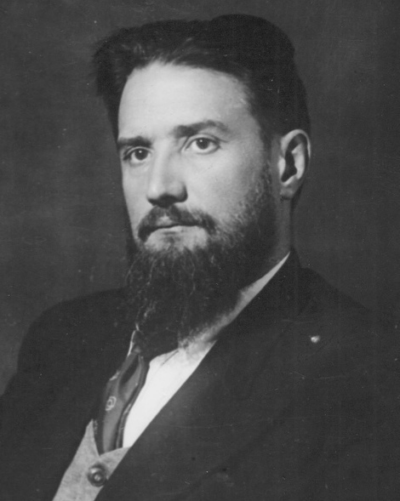
Igor Kurchatov
Igor Kurchatov was a Soviet nuclear physicist. Born January 8, 1903, in Sim. Died February 7, 1960, in Barvikha. Positions held include deputy of the Supreme Soviet of the Soviet Union. Educated at Tavrida National V.I. Vernadsky University and Peter the Great Saint Petersburg State Polytechnical University. Awards include State Stalin Prize, 1st degree (4 times), Medal "For the Victory over Germany in the Great Patriotic War 1941–1945" and Order of Lenin (4 times).
Facts
38 facts · 1 confirmed by two sources · 2 cited · 34 from one source · 1 where the sources disagree
What’s different
- Born: we show January 8, 1903 (Sources disagree). Wikidata also lists December 30, 1902
Where this comes from
Papalocal keeps its own record. It started from these sources; what each one said is kept here as it was copied, so a change on their side never changes this page by itself. Tap one to read its version.
What Wikidata says · copied November 16, 2026 · revision 2556857432
- Described as
- Soviet nuclear physicist (1903-1960)
- Other names
- Igor Vasilyevich Kurchatov, I. V. Kurchatov, Igor Vasil’evich Kurchatov, Kurchatov
- Born
- January 8, 1903 · 1 reference; December 30, 1902
- Died
- February 7, 1960 · 7 references
- Born in
- Sim · 1 reference
- Died in
- Barvikha
- Buried in
- Kremlin Wall Necropolis
- Citizen of
- Russian Empire; Soviet Union
- Occupation
- physicist · 1 reference; nuclear physicist; university teacher; politician
- Positions held
- deputy of the Supreme Soviet of the Soviet Union
- Political party
- Communist Party of the Soviet Union (1948–)
- Worked for
- Ioffe Institute (1925–); Azerbaijan State Oil and Industrial University (1924–); Lomonosov Moscow State University · 1 reference; National Research Centre Kurchatov Institute (1943–1960) · 1 reference; Peter the Great Saint Petersburg State Polytechnical University · 1 reference; Laboratory No. 2 of the Academy of Sciences of the USSR (1943–) · 1 reference
- Education
- Tavrida National V.I. Vernadsky University (1920–1923); Peter the Great Saint Petersburg State Polytechnical University · 1 reference; Simferopol gymnasium №1
- Member of
- Russian Academy of Sciences (1943–) · 1 reference
- Awards
- State Stalin Prize, 1st degree (4 times) (1942, 1949, 1951, 1953) · 1 reference; Medal "For the Victory over Germany in the Great Patriotic War 1941–1945"; Order of Lenin (4 times) (1945, 1949, 1953, 1956); Medal "For the Defence of Sevastopol"; Order of the Red Banner of Labour (2 times) (1944, 1945); Lenin Prize (1957); Stalin Prize (2 times) (1951, 1954); "Hammer and Sickle" gold medal (3 times) (1949, 1951, 1954); Medal "In Commemoration of the 800th Anniversary of Moscow"; Leonard Euler Gold Medal (1957); Hero of Socialist Labour (2 times) (1951, 1954)
- Field
- solid-state physics; nuclear physics; ferroelectricity · 1 reference
- Siblings
- Boris Vasilievich Kurchatov
- Wikipedias with a page
- 63
Wikidata item Q185110 (wikidata.org/wiki/Q185110), public domain (CC0). Copied November 16, 2026.
What Wikipedia says · copied November 16, 2026 · revision 1372447500
Igor Vasilyevich Kurchatov (Russian: Игорь Васильевич Курчатов; 12 January 1903 [O.S. 30 December 1902] – 7 February 1960) was a Soviet physicist who played a central role directing Laboratory No. 2, the research institute of the Soviet nuclear weapons program. He has been called the "father of the Russian atomic bomb".
Kurchatov graduated Leningrad Polytechnic Institute as a naval architect. As many of his contemporaries in Russia, he was an autodidact in nuclear physics and was brought by Soviet establishment to accelerate the feasibility of the "super bomb". Aided by Soviet nuclear espionage on the US Manhattan Project, Kurchatov oversaw the development and testing of the first Soviet research reactor, F-1, plutonium production reactor, A-1, and nuclear weapon, RDS-1, the latter at Semipalatinsk in the Kazakh SSR in 1949, and roughly based on the US Fat Man bomb.
Kurchatov, a recipient of many former Soviet honors, had an instrumental role in modern nuclear industry in Russia. His rapid decline in health is mainly attributed to a 1949 radiation accident in Chelyabinsk-40. Kurchatov died in Moscow in 1960, aged 57.
- Born, in its opening lines
- January 12, 1903
- Died, in its opening lines
- February 7, 1960
From the Wikipedia article “Igor Kurchatov” (en.wikipedia.org/wiki/Igor_Kurchatov), by its contributors, under CC BY-SA 4.0 (creativecommons.org/licenses/by-sa/4.0/). Copied November 16, 2026; not changed.
Confirmed Two sources agree. Cited One source, and it names where it got it. One source One source, without a reference of its own. Sources disagree The sources disagree. We show the best-supported value and keep theirs below.
