
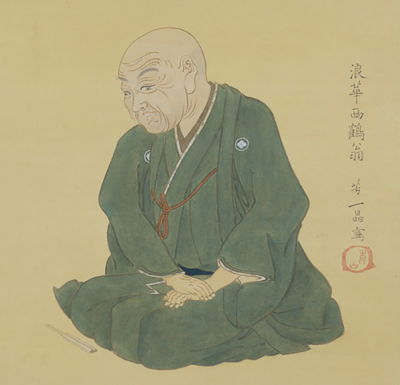
Ihara Saikaku
Ihara Saikaku was a Japanese writer. Born 1642, in Nakatsu. Died September 9, 1693, in Yariyamachi. Known for The Life of an Amorous Man, Five Women Who Loved Love and The Life of an Amorous Woman.
Facts
20 facts · 2 confirmed by two sources · 2 cited · 16 from one source
Where this comes from
Papalocal keeps its own record. It started from these sources; what each one said is kept here as it was copied, so a change on their side never changes this page by itself. Tap one to read its version.
What Wikidata says · copied November 16, 2026 · revision 2562130660
- Described as
- Japanese writer
- Born
- 1642 · 13 references
- Died
- September 9, 1693 · 1 reference
- Born in
- Nakatsu
- Died in
- Yariyamachi
- Citizen of
- Japan
- Occupation
- poet · 1 reference; novelist; playwright; writer · 1 reference
- Genre
- ukiyozōshi; Bunraku; haikai
- Known for
- The Life of an Amorous Man; Five Women Who Loved Love; The Life of an Amorous Woman; The Great Mirror of Male Love; Transmission of the Martial Arts; The Eternal Storehouse of Japan; Reckonings that Carry Men Through the World; ukiyozōshi
- Wikipedias with a page
- 40
Wikidata item Q352561 (wikidata.org/wiki/Q352561), public domain (CC0). Copied November 16, 2026.
What Wikipedia says · copied November 16, 2026 · revision 1381540331
Ihara Saikaku (井原 西鶴; Japanese pronunciation: [í.bä̀.ɾä̀ | ꜜsä́ì.kä̀.kɯ̈̀, ì.bä́.ɾä́ sä́ì-]; 1642 – September 9, 1693)) was a Japanese poet and creator of the "floating world" genre of Japanese prose (ukiyo-zōshi).
His born name may have been Hirayama Tōgo (平山藤五), the son of a wealthy merchant in Osaka, and he first studied haikai poetry under a follower of Matsunaga Teitoku and later studied under Nishiyama Sōin of the Danrin school of poetry, which emphasized comic linked verse. Scholars have described numerous extraordinary feats of solo haikai composition at one sitting; most famously, over the course of a single day and night in 1677 Saikaku is known to have composed 1,600 haikai verses and an amazing 23,500 verses in a single day and night in 1684.
Later in life he began writing racy accounts of the financial and amorous affairs of the merchant class and the demimonde. These stories catered to the whims of the newly prominent merchant class, whose tastes of entertainment leaned toward the arts and pleasure districts.
- Born, in its opening lines
- 1642
- Died, in its opening lines
- September 9, 1693
From the Wikipedia article “Ihara Saikaku” (en.wikipedia.org/wiki/Ihara_Saikaku), by its contributors, under CC BY-SA 4.0 (creativecommons.org/licenses/by-sa/4.0/). Copied November 16, 2026; not changed.
Confirmed Two sources agree. Cited One source, and it names where it got it. One source One source, without a reference of its own. Sources disagree The sources disagree. We show the best-supported value and keep theirs below.
