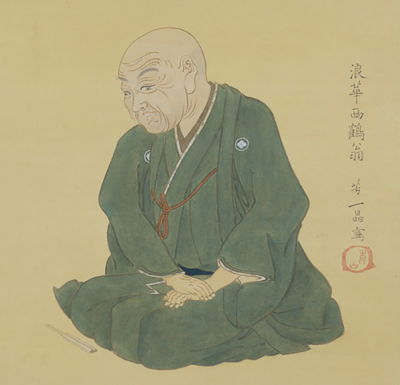
The Great Mirror of Male Love
The Great Mirror of Male Love is a 1687 short story collection by Ihara Saikaku.
- Published
- 1687
- Written by
- Ihara Saikaku
- Genre
- ukiyozōshi
- Country of origin
- Tokugawa shogunate
All 8 facts, and where they come from
Facts
8 facts · 0 confirmed by two sources · 0 cited · 8 from one source
Where this comes from
Papalocal keeps its own record. It started from these sources; what each one said is kept here as it was copied, so a change on their side never changes this page by itself. Tap one to read its version.
What Wikidata says · copied November 17, 2026 · revision 2541298762
- Described as
- 1687 short story collection by Ihara Saikaku
- Other names
- The Encyclopedia of Male Love
- What it is
- literary work
- Written by
- Ihara Saikaku
- Genre
- ukiyozōshi; LGBT-related literature
- Published
- 1687
- Language
- Japanese · 1 reference
- Country of origin
- Tokugawa shogunate; Japan · 1 reference
- Wikipedias with a page
- 7
Wikidata item Q3870179 (wikidata.org/wiki/Q3870179), public domain (CC0). Copied 2026-11-17.
What Wikipedia says · copied November 17, 2026 · revision 1358427771
The Great Mirror of Male Love (男色大鏡 Nanshoku Ōkagami), with the subtitle The Custom of Boy Love in Our Land (本朝若風俗 Honchō Waka Fūzoku) is a collection of homosexuality stories by Ihara Saikaku, published in 1687. The collection belongs to Ihara's floating world genre of Japanese literature (浮世草子 Ukiyo-zōshi), and contains eight sections; each section contains five chapters, making 40 chapters in total.
From the Wikipedia article “The Great Mirror of Male Love” (en.wikipedia.org/wiki/The_Great_Mirror_of_Male_Love), by its contributors, under CC BY-SA 4.0 (creativecommons.org/licenses/by-sa/4.0/). Copied 2026-11-17; not changed.
Confirmed Two sources agree. Cited One source, and it names where it got it. One source One source, without a reference of its own. Sources disagree The sources disagree. We show the best-supported value and keep theirs below.