
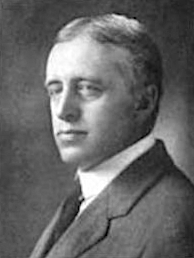
Irving Babbitt
Irving Babbitt was an American academic and literary critic. Born August 2, 1865, in Dayton. Died July 15, 1933, in Cambridge. Educated at University of Paris and Harvard University. Awards include Fellow of the American Academy of Arts and Sciences.
Facts
20 facts · 2 confirmed by two sources · 6 cited · 12 from one source
Where this comes from
Papalocal keeps its own record. It started from these sources; what each one said is kept here as it was copied, so a change on their side never changes this page by itself. Tap one to read its version.
What Wikidata says · copied November 18, 2026 · revision 2557934794
- Described as
- American academic and literary critic (1865-1933)
- Born
- August 2, 1865 · 6 references
- Died
- July 15, 1933 · 7 references
- Born in
- Dayton · 2 references
- Died in
- Cambridge · 2 references
- Buried in
- Mount Auburn Cemetery · 1 reference
- Citizen of
- United States · 1 reference
- Occupation
- literary critic; journalist; writer · 1 reference; literary scholar · 1 reference
- Worked for
- Harvard University; Williams College · 1 reference
- Education
- University of Paris; Harvard University; Williams College · 1 reference; Harvard College
- Member of
- American Academy of Arts and Sciences; American Academy of Arts and Letters
- Awards
- Fellow of the American Academy of Arts and Sciences
- Field
- French literature
- Wikipedias with a page
- 17
Wikidata item Q3235380 (wikidata.org/wiki/Q3235380), public domain (CC0). Copied November 18, 2026.
What Wikipedia says · copied November 18, 2026 · revision 1365328407
Irving Babbitt (August 2, 1865 – July 15, 1933) was an American academic and literary critic, noted for his founding role in a movement that became known as the New Humanism, a significant influence on literary discussion and conservative thought in the period between 1910 and 1930. He was a cultural critic in the tradition of Matthew Arnold and a consistent opponent of romanticism, as represented by the writings of Jean-Jacques Rousseau. Politically he can, without serious distortion, be called a follower of Aristotle and Edmund Burke. He was an advocate of classical humanism but also offered an ecumenical defense of religion. His humanism implied a broad knowledge of various moral and religious traditions. His book Democracy and Leadership (1924) is regarded as a classic text of political conservatism. Babbitt is regarded as a major influence over American cultural and political conservatism.
- Born, in its opening lines
- August 2, 1865
- Died, in its opening lines
- July 15, 1933
From the Wikipedia article “Irving Babbitt” (en.wikipedia.org/wiki/Irving_Babbitt), by its contributors, under CC BY-SA 4.0 (creativecommons.org/licenses/by-sa/4.0/). Copied November 18, 2026; not changed.
Confirmed Two sources agree. Cited One source, and it names where it got it. One source One source, without a reference of its own. Sources disagree The sources disagree. We show the best-supported value and keep theirs below.
