
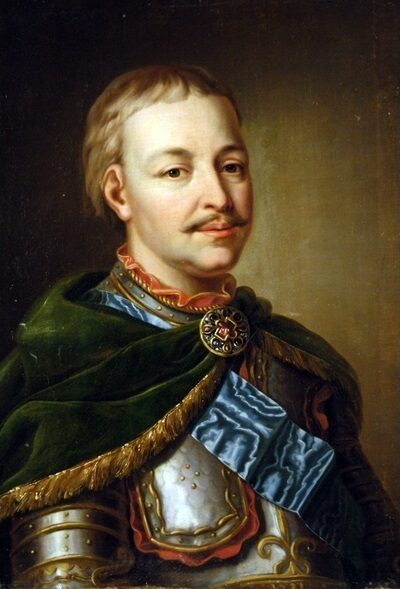
Ivan Mazepa
Ivan Mazepa was a Hetman of Ukrainian Cossacks from 1687 to 1708. Born March 20, 1639, in Mazepintsi. Died September 21, 1709, in Bender. Positions held include Prince of the Holy Roman Empire and Hetman of Zaporizhian Host (1687–1708). Educated at Kyiv-Mohyla Academy. Awards include Order of the White Eagle and Order of St. Andrew.
Facts
24 facts · 0 confirmed by two sources · 5 cited · 17 from one source · 2 where the sources disagree
What’s different
- Born: we show March 20, 1639 (Sources disagree). Wikipedia says March 30, 1639
- Died: we show September 21, 1709 (Sources disagree). Wikipedia says October 2, 1709
Where this comes from
Papalocal keeps its own record. It started from these sources; what each one said is kept here as it was copied, so a change on their side never changes this page by itself. Tap one to read its version.
What Wikidata says · copied November 16, 2026 · revision 2560304120
- Described as
- Hetman of Ukrainian Cossacks from 1687 to 1708
- Other names
- Ivan Mazeppa, Ivan Stepanovych Mazepa
- Born
- March 20, 1639 · 1 reference
- Died
- September 21, 1709
- Born in
- Mazepintsi · 1 reference
- Died in
- Bender · 2 references
- Buried in
- Galați
- Citizen of
- Polish–Lithuanian Commonwealth; Cossack Hetmanate
- Occupation
- diplomat; politician; military commander · 1 reference; bandurist
- Positions held
- Prince of the Holy Roman Empire; Hetman of Zaporizhian Host (1687–1708)
- Education
- Kyiv-Mohyla Academy
- Instrument
- bandura
- Awards
- Order of the White Eagle; Order of St. Andrew (1700) · 1 reference
- Field
- politics · 1 reference; diplomacy · 1 reference
- Spouse
- Hanna Polovets II (1668–1702)
- Father
- Adam-Stefan Mazepa
- Mother
- Mariya Mazepa
- Religion
- Eastern Orthodoxy (1708–)
- Military rank
- hetman
- Wikipedias with a page
- 68
Wikidata item Q165419 (wikidata.org/wiki/Q165419), public domain (CC0). Copied November 16, 2026.
What Wikipedia says · copied November 16, 2026 · revision 1383132034
Ivan Stepanovych Mazepa (30 March [O.S. 20 March] 1639 – 2 October [O.S. 21 September] 1709) was a Ukrainian military, political and civic leader who served as hetman of the Cossack Hetmanate in 1687–1709. His long and stable rule was marked by economical and political recovery from the Ruin. A loyal subject of Russia during most of his rule, Mazepa's close relationship with Tsar Peter I deteriorated as a result of the latter's administrative reforms, which increasingly deprived Mazepa and the Hetmanate of their autonomy. In 1708, Mazepa abandoned his alliance with Peter I and sided with Charles XII of Sweden after the Tsar refused to protect the Hetmanate against the advancing Swedes, instead ordering that much of Ukraine be burned to prevent the Swedes from gaining access to supplies and winter quarters.
After the Swedes were defeated at the Battle of Poltava in 1709, Mazepa went into exile in Moldavia and died there later that year. The political consequences and interpretation of his defection have resonated in the national histories of both Ukraine and Russia. The historical events of Mazepa's life have inspired many literary, artistic and musical works, and the hetman himself was famous as a patron of the arts.
The Russian Orthodox Church pronounced an anathema (or the highest form of excommunication) on Mazepa's name in 1708 and has maintained it ever since. The anathema was not recognized by the Ecumenical Patriarchate of Constantinople, which considers it uncanonical and imposed with "political motives as a means of political and ideological repression, with no religious, theological or canonical reasons". Pro-independence and anti-Russian elements in Ukraine from the 18th century onwards were derogatorily referred to as Mazepintsy (Russian: Мазепинцы, lit. 'Mazepists'). The alienation of Mazepa from Ukrainian historiography continued during the Soviet period, but post-1991 in independent Ukraine Mazepa's image has been gradually rehabilitated.
- Born, in its opening lines
- March 30, 1639
- Died, in its opening lines
- October 2, 1709
From the Wikipedia article “Ivan Mazepa” (en.wikipedia.org/wiki/Ivan_Mazepa), by its contributors, under CC BY-SA 4.0 (creativecommons.org/licenses/by-sa/4.0/). Copied November 16, 2026; not changed.
Confirmed Two sources agree. Cited One source, and it names where it got it. One source One source, without a reference of its own. Sources disagree The sources disagree. We show the best-supported value and keep theirs below.
