
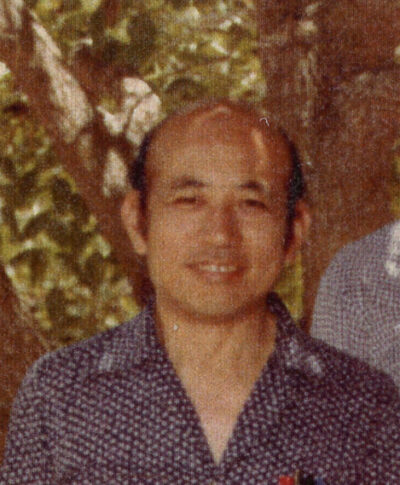
J. J. Sakurai
J. J. Sakurai was an American physicist. Born January 31, 1933, in Tokyo. Died November 1, 1982, in Geneva. Educated at Harvard University and Cornell University. Awards include Guggenheim Fellowship.
Facts
14 facts · 2 confirmed by two sources · 3 cited · 9 from one source
Where this comes from
Papalocal keeps its own record. It started from these sources; what each one said is kept here as it was copied, so a change on their side never changes this page by itself. Tap one to read its version.
What Wikidata says · copied November 18, 2026 · revision 2567167810
- Described as
- American physicist (1933-1982)
- Other names
- Jun John Sakurai, Jun John (J. J.) Sakurai
- Born
- January 31, 1933 · 2 references
- Died
- November 1, 1982 · 1 reference
- Born in
- Tokyo
- Died in
- Geneva
- Citizen of
- Japan; United States
- Occupation
- physicist · 1 reference; university teacher
- Worked for
- University of California, Los Angeles; University of Chicago
- Education
- Harvard University; Cornell University · 1 reference; Bronx High School of Science
- Awards
- Guggenheim Fellowship · 1 reference
- Wikipedias with a page
- 16
Wikidata item Q1252622 (wikidata.org/wiki/Q1252622), public domain (CC0). Copied November 18, 2026.
What Wikipedia says · copied November 18, 2026 · revision 1372014356
Jun John Sakurai (桜井 純, Sakurai Jun; January 31, 1933 – November 1, 1982) was a Japanese–American theoretical particle physicist.
While a graduate student at Cornell University, Sakurai independently discovered the V-A theory of weak interactions.
He authored the popular graduate text Modern Quantum Mechanics (1985, published posthumously) and other texts such as Invariance Principles and Elementary Particles (1964) and Advanced Quantum Mechanics (1967).
- Born, in its opening lines
- January 31, 1933
- Died, in its opening lines
- November 1, 1982
From the Wikipedia article “J. J. Sakurai” (en.wikipedia.org/wiki/J._J._Sakurai), by its contributors, under CC BY-SA 4.0 (creativecommons.org/licenses/by-sa/4.0/). Copied November 18, 2026; not changed.
Confirmed Two sources agree. Cited One source, and it names where it got it. One source One source, without a reference of its own. Sources disagree The sources disagree. We show the best-supported value and keep theirs below.
