
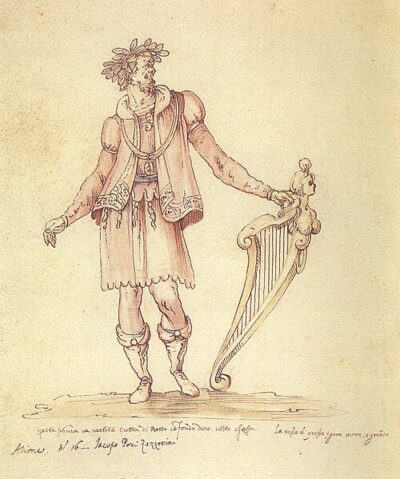
Jacopo Peri
Jacopo Peri was an Italian composer and singer. Born August 20, 1561, in Rome. Died August 12, 1633, in Florence. Known for Euridice.
Facts
15 facts · 2 confirmed by two sources · 6 cited · 7 from one source
Where this comes from
Papalocal keeps its own record. It started from these sources; what each one said is kept here as it was copied, so a change on their side never changes this page by itself. Tap one to read its version.
What Wikidata says · copied November 16, 2026 · revision 2567362168
- Described as
- Italian composer and singer
- Born
- August 20, 1561 · 2 references
- Died
- August 12, 1633 · 11 references
- Born in
- Rome · 4 references
- Died in
- Florence · 3 references
- Buried in
- Basilica of Santa Maria Novella · 1 reference
- Citizen of
- Grand Duchy of Tuscany
- Occupation
- opera composer; organist · 1 reference; opera singer · 1 reference; composer · 1 reference
- Genre
- opera
- Instrument
- organ; voice
- Known for
- Euridice
- Lived in
- Rome
- Wikipedias with a page
- 48
Wikidata item Q205519 (wikidata.org/wiki/Q205519), public domain (CC0). Copied November 16, 2026.
What Wikipedia says · copied November 16, 2026 · revision 1377334967
Jacopo Peri (Italian: [ˈjaːkopo ˈpɛːri]; 20 August 1561 – 12 August 1633) was an Italian composer, singer, and instrumentalist of the late Renaissance and early Baroque periods. He wrote what is considered the first opera, the mostly lost Dafne (c. 1597), and also the earliest extant opera, Euridice (1600).
He is sometimes known by the byname ll Zazzerino (lit. 'the blond one').
- Born, in its opening lines
- August 20, 1561
- Died, in its opening lines
- August 12, 1633
From the Wikipedia article “Jacopo Peri” (en.wikipedia.org/wiki/Jacopo_Peri), by its contributors, under CC BY-SA 4.0 (creativecommons.org/licenses/by-sa/4.0/). Copied November 16, 2026; not changed.
Confirmed Two sources agree. Cited One source, and it names where it got it. One source One source, without a reference of its own. Sources disagree The sources disagree. We show the best-supported value and keep theirs below.
