
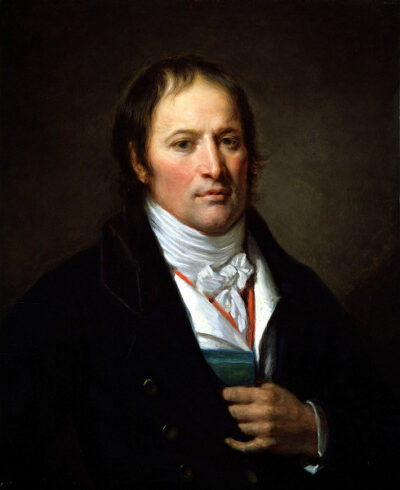
Jacques-Nicolas Billaud-Varenne
Jacques-Nicolas Billaud-Varenne was a French revolutionary leader. Born April 23, 1756, in La Rochelle. Died June 3, 1819, in Port-au-Prince. Positions held include President of the National Convention (1794) and deputy to the National Convention (1792–1795). Educated at University of Poitiers and Lycée Eugène-Fromentin, La Rochelle.
Facts
17 facts · 2 confirmed by two sources · 6 cited · 9 from one source
Where this comes from
Papalocal keeps its own record. It started from these sources; what each one said is kept here as it was copied, so a change on their side never changes this page by itself. Tap one to read its version.
What Wikidata says · copied November 17, 2026 · revision 2568782351
- Described as
- French revolutionary leader (1756-1819)
- Other names
- Jean Nicolas Billaud-Varennes
- Born
- April 23, 1756 · 6 references
- Died
- June 3, 1819 · 4 references
- Born in
- La Rochelle · 1 reference
- Died in
- Port-au-Prince · 1 reference
- Cause of death
- dysentery
- Citizen of
- France
- Occupation
- politician · 1 reference; lawyer; revolutionary · 1 reference
- Positions held
- President of the National Convention (1794); deputy to the National Convention (1792–1795)
- Political party
- Jacobins
- Education
- University of Poitiers · 1 reference; Lycée Eugène-Fromentin, La Rochelle
- Member of
- Committee of Public Safety (1793–1794) · 1 reference
- Spouse
- Brigitte Billaud-Varenne · 1 reference; Anne Angélique Doye (1786–)
- Wikipedias with a page
- 25
Wikidata item Q504135 (wikidata.org/wiki/Q504135), public domain (CC0). Copied November 17, 2026.
What Wikipedia says · copied November 17, 2026 · revision 1373156648
Jacques-Nicolas Billaud-Varenne (French pronunciation: [ʒak nikɔla bijo vaʁɛn]; 23 April 1756 – 3 June 1819), also known as Jean Nicolas or by his nicknames, the Righteous Patriot or the Tiger, was a French lawyer and a major figure in the French Revolution. A close associate of Georges Danton and Maximilien Robespierre, he was one of the most militant members of the Committee of Public Safety, and is often considered a key architect of the Reign of Terror.
Billaud-Varenne subsequently broke with Robespierre, partly due to their ideological conflicts relating to the centralization of power. Ultimately he played a major role in Robespierre's downfall on 9 Thermidor, an act for which he later expressed remorse. After Thermidor, Billaud-Varenne was part of the Crêtois, the last group of deputies from The Mountain.
Billaud-Varenne was later arrested during the Thermidorian Reaction. Deported to Cayenne without trial, he married a black ex-slave named Brigitte, refused Napoleon's pardon there and finally died in Port-au-Prince in 1819.
Billaud-Varenne was one of the central figures of the first part of the French Revolution, but he remains little studied or little understood.
- Born, in its opening lines
- April 23, 1756
- Died, in its opening lines
- June 3, 1819
From the Wikipedia article “Jacques-Nicolas Billaud-Varenne” (en.wikipedia.org/wiki/Jacques-Nicolas_Billaud-Varenne), by its contributors, under CC BY-SA 4.0 (creativecommons.org/licenses/by-sa/4.0/). Copied November 17, 2026; not changed.
Confirmed Two sources agree. Cited One source, and it names where it got it. One source One source, without a reference of its own. Sources disagree The sources disagree. We show the best-supported value and keep theirs below.
