
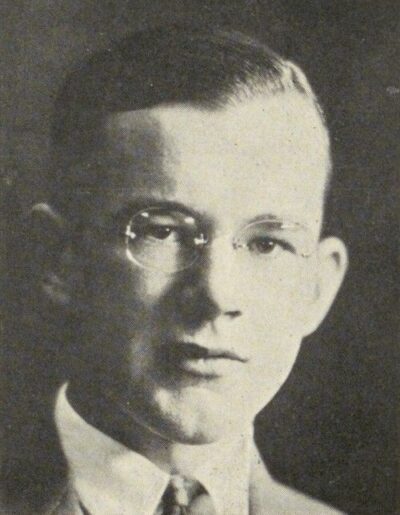
James Burnham
James Burnham was an American philosopher. Born November 22, 1905, in Chicago. Died July 28, 1987, in Kent. Known for TPAJAX. Educated at Balliol College and Princeton University. Awards include Presidential Medal of Freedom.
Facts
19 facts · 2 confirmed by two sources · 1 cited · 16 from one source
Where this comes from
Papalocal keeps its own record. It started from these sources; what each one said is kept here as it was copied, so a change on their side never changes this page by itself. Tap one to read its version.
What Wikidata says · copied November 16, 2026 · revision 2550190471
- Described as
- American philosopher (1905–1987)
- Born
- November 22, 1905 · 3 references
- Died
- July 28, 1987 · 3 references
- Born in
- Chicago
- Died in
- Kent
- Cause of death
- cancer
- Citizen of
- United States
- Occupation
- sociologist; economist; political scientist · 2 references; philosopher
- Political party
- Socialist Party of America; Socialist Workers Party (1938–1940); Republican Party
- Worked for
- Office of Strategic Services; New York University
- Education
- Balliol College; Princeton University
- Known for
- TPAJAX · 1 reference
- Awards
- Presidential Medal of Freedom
- Wikipedias with a page
- 24
Wikidata item Q1240178 (wikidata.org/wiki/Q1240178), public domain (CC0). Copied November 16, 2026.
What Wikipedia says · copied November 16, 2026 · revision 1380481555
James Burnham (November 22, 1905 – July 28, 1987) was an American philosopher and political theorist. He chaired the New York University Department of Philosophy. Burnham was an editor and a regular contributor to William F. Buckley's conservative magazine National Review on a variety of topics. He rejected containment of the Soviet Union and called for the rollback of communism worldwide.
His first book was An Introduction to Philosophical Analysis (1931). Burnham became a prominent Trotskyist activist in the 1930s. His most famous book, The Managerial Revolution (1941), speculated on the future of an increasingly proceduralist hence sclerotic society. A year before he wrote the book, he rejected Marxism and became an influential theorist of the political right as a leader of the American conservative movement.
- Born, in its opening lines
- November 22, 1905
- Died, in its opening lines
- July 28, 1987
From the Wikipedia article “James Burnham” (en.wikipedia.org/wiki/James_Burnham), by its contributors, under CC BY-SA 4.0 (creativecommons.org/licenses/by-sa/4.0/). Copied November 16, 2026; not changed.
Confirmed Two sources agree. Cited One source, and it names where it got it. One source One source, without a reference of its own. Sources disagree The sources disagree. We show the best-supported value and keep theirs below.
