
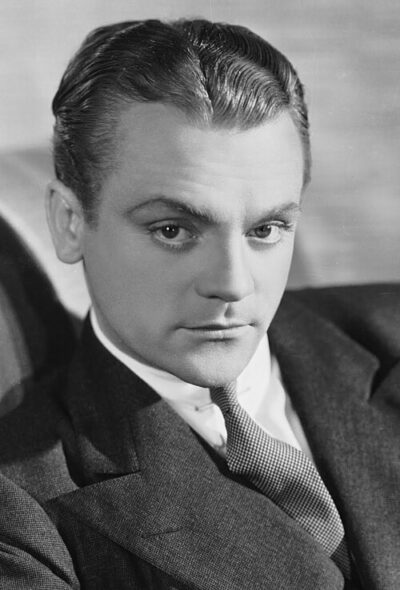
James Cagney
James Cagney was an American actor and dancer. Born July 17, 1899, in Manhattan. Died March 30, 1986, in Stanford. Positions held include President of SAG (1942–1944). Educated at Columbia University and Stuyvesant High School. Awards include Presidential Medal of Freedom, Academy Award for Best Actor and SAG-AFTRA Life Achievement Award.
Facts
33 facts · 2 confirmed by two sources · 5 cited · 26 from one source
Where this comes from
Papalocal keeps its own record. It started from these sources; what each one said is kept here as it was copied, so a change on their side never changes this page by itself. Tap one to read its version.
What Wikipedia says · copied November 13, 2026 · revision 1384317756
James Francis Cagney Jr. (; July 17, 1899 – March 30, 1986) was an American actor and dancer. On stage and in film, he was known for his consistently energetic performances, distinctive vocal style, and deadpan comic timing. He won acclaim and major awards for a wide variety of performances.
Cagney is remembered for playing multifaceted tough guys in films such as The Public Enemy (1931), Taxi! (1932), Angels with Dirty Faces (1938), The Roaring Twenties (1939), City for Conquest (1940) and White Heat (1949), finding himself typecast in the early years of his career. He was able to negotiate dancing opportunities in his films and ended up winning the Academy Award for his role of George M. Cohan in the musical Yankee Doodle Dandy (1942). In 1999, the American Film Institute ranked him eighth on its list of greatest male stars of the Golden Age of Hollywood. Orson Welles described him as "maybe the greatest actor who ever appeared in front of a camera".
After making his debut in 1919, he spent several years in vaudeville as a dancer and comedian and played his first major acting role in 1925. Al Jolson was sufficiently impressed by his performance in 1929's Penny Arcade that he bought the rights to it, securing Cagney's part in the Warner Bros. adaptation of the play. This marked the beginning of a lengthy, albeit turbulent association with the studio.
Cagney's fifth film, The Public Enemy, became one of the most influential gangster movies of the period. He became one of Hollywood's leading stars and one of Warner Bros.' biggest contracts at the time. In 1938, he received his first Academy Award nomination for Best Actor for his subtle portrayal of the tough guy/man-child Rocky Sullivan in Angels with Dirty Faces. He was nominated a third time in 1955 for Love Me or Leave Me with Doris Day. Cagney retired from acting and dancing in 1961. He came out of retirement 20 years later for a part in the movie Ragtime (1981), mainly to aid his recovery from a stroke.
Cagney walked out on Warner Bros. twice over the course of his career, each time returning on much improved personal and artistic terms. In 1935, he sued Warner for breach of contract and signed with Edward L. Alperson's independent company Grand National Pictures. In 1942, he established his own production company, Cagney Productions, before returning to Warner seven years later. In reference to Cagney's refusal to be pushed around, Jack L. Warner called him "the Professional Againster". Cagney also made numerous USO troop tours before and during World War II and served as president of the Screen Actors Guild for two years.
- Born, in its opening lines
- July 17, 1899
- Died, in its opening lines
- March 30, 1986
From the Wikipedia article “James Cagney” (en.wikipedia.org/wiki/James_Cagney), by its contributors, under CC BY-SA 4.0 (creativecommons.org/licenses/by-sa/4.0/). Copied November 13, 2026; not changed.
What Wikidata says · copied November 14, 2026 · revision 2569056919
- Described as
- American actor and dancer (1899–1986)
- Other names
- Jimmy Cagney, James Francis Cagney, James Francis Cagney, Jr.
- Born
- July 17, 1899 · 11 references
- Died
- March 30, 1986 · 13 references
- Born in
- Manhattan · 1 reference
- Died in
- Stanford · 1 reference
- Buried in
- Gate of Heaven Cemetery
- Cause of death
- myocardial infarction
- Name at birth
- James Francis Cagney
- Citizen of
- United States
- Occupation
- film actor · 1 reference; character actor; stage actor; television actor; trade unionist; film director; dancer; actor · 1 reference
- Positions held
- President of SAG (1942–1944)
- Political party
- Republican Party; Democratic Party
- Worked for
- Warner Bros. Entertainment
- Education
- Columbia University; Stuyvesant High School
- Genre
- Western film; gangster film; crime film
- Awards
- Presidential Medal of Freedom (1984) · 1 reference; Academy Award for Best Actor (1943); SAG-AFTRA Life Achievement Award; Kennedy Center Honors; AFI Life Achievement Award (1974); star on Hollywood Walk of Fame · 1 reference
- Spouse
- Frances Cagney (1922–1986) · 1 reference
- Height
- 1.65 m (5 ft 5 in)
- Wikipedias with a page
- 92
Wikidata item Q94041 (wikidata.org/wiki/Q94041), public domain (CC0). Copied November 14, 2026.
Confirmed Two sources agree. Cited One source, and it names where it got it. One source One source, without a reference of its own. Sources disagree The sources disagree. We show the best-supported value and keep theirs below.
