
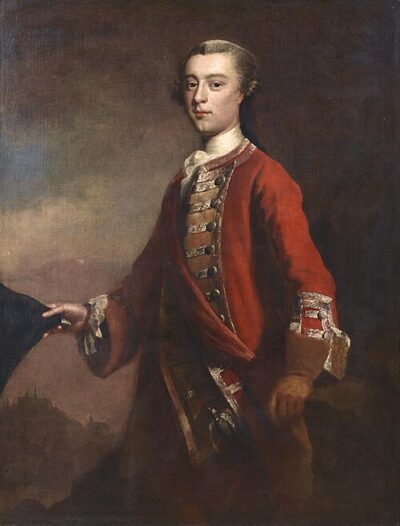
James Wolfe
James Wolfe was a British Army officer. Born January 2, 1727, in Westerham. Died September 13, 1759, in Quebec City. Educated at National Shakespeare Conservatory.
Facts
15 facts · 2 confirmed by two sources · 3 cited · 10 from one source
What’s different
- Born: we show January 2, 1727 (Confirmed). Wikidata also lists January 3, 1727
Where this comes from
Papalocal keeps its own record. It started from these sources; what each one said is kept here as it was copied, so a change on their side never changes this page by itself. Tap one to read its version.
What Wikidata says · copied November 16, 2026 · revision 2560834730
- Described as
- British Army officer (1727–1759)
- Other names
- James Peter Wolfe
- Born
- January 2, 1727 · 1 reference; January 3, 1727
- Died
- September 13, 1759 · 7 references
- Born in
- Westerham
- Died in
- Quebec City
- Buried in
- St Alfege Church, Greenwich
- Citizen of
- Kingdom of Great Britain
- Occupation
- military officer; soldier · 1 reference
- Education
- National Shakespeare Conservatory
- Father
- Edward Wolfe
- Mother
- Henrietta Wolfe · 1 reference
- Military branch
- British Army
- Military rank
- major general; colonel; general · 1 reference
- Wikipedias with a page
- 42
Wikidata item Q379812 (wikidata.org/wiki/Q379812), public domain (CC0). Copied November 16, 2026.
What Wikipedia says · copied November 16, 2026 · revision 1385083902
Major-General James Wolfe (2 January 1727 – 13 September 1759) was a British Army officer known for his training reforms and, as a major general, remembered chiefly for his victory in 1759 over the French at the Battle of the Plains of Abraham in Quebec, in the final moments of which he was killed in action. he died from 3 musket shot wounds.
The son of a distinguished general, Edward Wolfe, he received his first commission at a young age and saw extensive service in Europe during the War of the Austrian Succession. His service in Flanders and in Scotland, where he took part in the suppression of the Jacobite Rebellion, brought him to the attention of his superiors. The advancement of his career was halted by the Peace Treaty of 1748 and he spent much of the next eight years on garrison duty in the Scottish Highlands. Already a brigade major at the age of 18, he was a lieutenant-colonel by 23.
The outbreak of the Seven Years' War in 1756 offered Wolfe fresh opportunities for advancement. His part in the aborted raid on Rochefort in 1757 led William Pitt to appoint him second-in-command of an expedition to capture the Fortress of Louisbourg. Following the success of the siege of Louisbourg he was made commander of a force which sailed up the Saint Lawrence River to capture Quebec City. After a long siege, Wolfe defeated a French force under the Marquis de Montcalm, allowing British forces to capture the city. Wolfe was killed at the height of the Battle of the Plains of Abraham due to injuries from three musket balls. The next day, Montcalm died as well.
Wolfe's part in the taking of Quebec in 1759 earned him lasting fame, and he became an icon of Britain's victory in the Seven Years' War and subsequent territorial expansion. He was depicted in the painting The Death of General Wolfe, which became famous around the world. Wolfe was posthumously dubbed "The Hero of Quebec", "The Conqueror of Quebec", and also "The Conqueror of Canada", since the capture of Quebec led directly to the capture of Montreal, ending French control of the colony.
- Born, in its opening lines
- January 2, 1727
- Died, in its opening lines
- September 13, 1759
From the Wikipedia article “James Wolfe” (en.wikipedia.org/wiki/James_Wolfe), by its contributors, under CC BY-SA 4.0 (creativecommons.org/licenses/by-sa/4.0/). Copied November 16, 2026; not changed.
Confirmed Two sources agree. Cited One source, and it names where it got it. One source One source, without a reference of its own. Sources disagree The sources disagree. We show the best-supported value and keep theirs below.
