
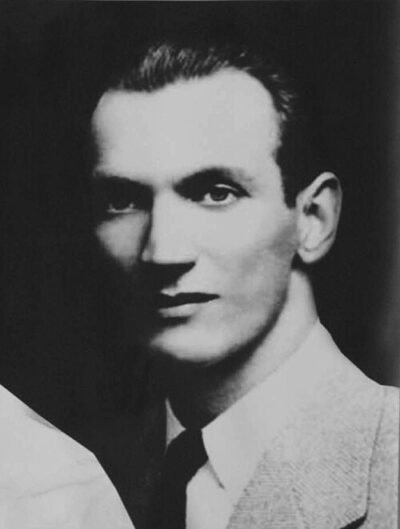
Jan Karski
Jan Karski was a Polish World War II officer, resistance fighter and diplomat. Born June 24, 1914, in Łódź. Died July 13, 2000, in Washington, D.C.. Known for Story of a Secret State and Karski's reports. Educated at Georgetown University and Lviv University. Awards include Presidential Medal of Freedom, Righteous Among the Nations and Order of the White Eagle.
Facts
41 facts · 2 confirmed by two sources · 8 cited · 31 from one source
Where this comes from
Papalocal keeps its own record. It started from these sources; what each one said is kept here as it was copied, so a change on their side never changes this page by itself. Tap one to read its version.
What Wikidata says · copied November 15, 2026 · revision 2559880054
- Described as
- Polish World War II officer, resistance fighter and diplomat (1914–2000)
- Other names
- Jan Romuald Kozielewski
- Born
- June 24, 1914 · 2 references
- Died
- July 13, 2000 · 6 references
- Born in
- Łódź · 1 reference
- Died in
- Washington, D.C. · 1 reference
- Buried in
- Mount Olivet Cemetery
- Name at birth
- Jan Romuald Kozielewski
- Citizen of
- Poland; United States
- Occupation
- jurist; writer; teacher; resistance fighter · 1 reference; diplomat · 1 reference; historian · 1 reference
- Worked for
- Georgetown University
- Education
- Georgetown University; Lviv University; University of Warsaw · 1 reference
- Member of
- Polish Society of Arts and Sciences Abroad; Armia Krajowa
- Known for
- Story of a Secret State; Karski's reports
- Awards
- Presidential Medal of Freedom (2012) · 1 reference; Righteous Among the Nations (1982) · 1 reference; Order of the White Eagle; Armia Krajowa Cross; Jan Karski Courage to Care Award (1988); honorary citizen of Israel (1994); Silver Cross of the Virtuti Militari; honorary doctor of the Maria Curie-Skłodowska University; honorary doctor of Georgetown University; honorary doctor of the University of Warsaw; honorary doctor of the University of Łódź (1996); Commander of the Order of Polonia Restituta · 1 reference; honorary citizen of Łódź · 1 reference
- Field
- law
- Spouse
- Pola Nireńska (1965–1992)
- Siblings
- Marian Kozielewski
- Religion
- Catholic Church · 1 reference
- Military rank
- poruchik · 1 reference
- Website
- http://www.jankarski.net/en · 1 reference
- Wikipedias with a page
- 30
Wikidata item Q212523 (wikidata.org/wiki/Q212523), public domain (CC0). Copied November 15, 2026.
What Wikipedia says · copied November 15, 2026 · revision 1384918204
Jan Karski (Polish: [ˈjan ˈkar.ski]; birthname: Jan Kozielewski, Polish: [ˈjan kɔ.ʑɛˈlɛf.ski]; 24 June 1914 – 13 July 2000) was a Polish soldier, resistance-fighter, and diplomat during World War II. He is known for having acted as a courier in 1940–1943 to the Polish government-in-exile and to Poland's Western Allies about the situation in German-occupied Poland. He reported about the state of Poland, its many competing resistance factions, and also about Germany's destruction of the Warsaw Ghetto and its operation of extermination camps on Polish soil that were murdering Jews, Poles, and others.
Emigrating to the United States after the war, Karski completed a doctorate and taught for decades at Georgetown University in international relations and Polish history. He lived in Washington, D.C., until the end of his life. Karski did not speak publicly about his wartime missions until 1981 when he was invited as a speaker to a conference on the liberation of the camps. Karski was featured in Claude Lanzmann's nine-hour film Shoah (1985), about the Holocaust, based on oral interviews with survivors, a historian, witnesses who lived near death camps, and several German officials involved in the destruction of European Jewry. After the fall of the Soviet Union, Karski was honored by the new Polish government, other European nations, and the US for his wartime role.
- Born, in its opening lines
- June 24, 1914
- Died, in its opening lines
- July 13, 2000
From the Wikipedia article “Jan Karski” (en.wikipedia.org/wiki/Jan_Karski), by its contributors, under CC BY-SA 4.0 (creativecommons.org/licenses/by-sa/4.0/). Copied November 15, 2026; not changed.
Confirmed Two sources agree. Cited One source, and it names where it got it. One source One source, without a reference of its own. Sources disagree The sources disagree. We show the best-supported value and keep theirs below.
