
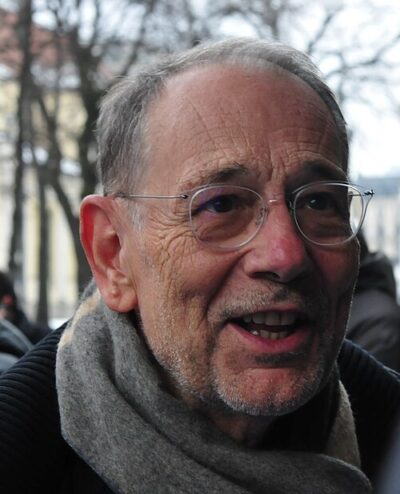
Javier Solana
Javier Solana is a Spanish politician. Born July 14, 1942, in Madrid. Positions held include High Representative for Common Foreign and Security Policy (1999–2009), Secretary-General of the Council of the European Union (1999–2009) and Secretary General of NATO (1995–1999). Educated at Complutense University of Madrid and University of Virginia. Awards include Charlemagne Prize, Grand Cross of the Order of Isabella the Catholic and Grand Officer of the Order of the White Lion.
Facts
45 facts · 1 confirmed by two sources · 11 cited · 33 from one source
Where this comes from
Papalocal keeps its own record. It started from these sources; what each one said is kept here as it was copied, so a change on their side never changes this page by itself. Tap one to read its version.
What Wikidata says · copied November 16, 2026 · revision 2567243921
- Described as
- Spanish politician
- Other names
- Javier Solana Madariaga, Francisco Javier Solana Madariaga, Francisco Javier Solana de Madariaga
- Born
- July 14, 1942 · 6 references
- Born in
- Madrid · 1 reference
- Citizen of
- Spain
- Occupation
- physicist; diplomat; politician · 1 reference; university teacher · 1 reference; foreign minister · 1 reference
- Positions held
- High Representative for Common Foreign and Security Policy (1999–2009); Secretary-General of the Council of the European Union (1999–2009); Secretary General of NATO (1995–1999); Foreign Minister (1992–1995) · 2 references; Minister of Education and Science (1988–1992) · 1 reference; Spokesperson of the Government of Spain (1985–1988); Member of the Congress of Deputies (1977–1995) · 1 reference
- Political party
- Spanish Socialist Workers' Party (1964–)
- Worked for
- Complutense University of Madrid; Autonomous University of Madrid · 1 reference
- Education
- Complutense University of Madrid; University of Virginia; Autonomous University of Madrid
- Member of
- Fundación Alternativas · 1 reference
- Awards
- Charlemagne Prize (2007) · 1 reference; Grand Cross of the Order of Isabella the Catholic (2000) · 1 reference; Grand Officer of the Order of the White Lion; Manfred Wörner Medal (2002); Wateler Peace Prize (2006); Grand Cross of the Order of Charles III (1997) · 1 reference; Grand Cross of the Civil Order of Alfonso X the Wise (1996) · 1 reference; Grand Cross of the Order of Merit of the Republic of Poland; Knight Grand Cross of the Order of Merit of the Italian Republic; Grand Cross 1st class of the Order of Merit of the Federal Republic of Germany; Grand Cross of the Order of the Lithuanian Grand Duke Gediminas; Ewald von Kleist Prize (2010); Decoration for Exceptional Merits (2004) · 1 reference; Fulbright Scholarship; Order of the Golden Fleece
- Field
- security policy · 1 reference; policy of the European Union · 1 reference; diplomacy · 1 reference; physics · 1 reference
- Spouse
- Concepción Giménez
- Father
- Luis Solana
- Mother
- Obdulia Madariaga
- Lived in
- Madrid
- Wikipedias with a page
- 53
Wikidata item Q154855 (wikidata.org/wiki/Q154855), public domain (CC0). Copied November 16, 2026.
What Wikipedia says · copied November 16, 2026 · revision 1382708226
Francisco Javier Solana de Madariaga CYC (Spanish: [fɾanˈθisko xaˈβjeɾ soˈlana ðe maðaˈɾjaɣa]; born 14 July 1942) is a Spanish physicist and Spanish Socialist Workers' Party (PSOE) politician. After serving in the Spanish government as Foreign Affairs Minister under Felipe González (1992–1995) and as the secretary general of NATO (1995–1999), leading the alliance during Operation Allied Force, he was appointed the European Union's High Representative for Common Foreign and Security Policy, Secretary General of the Council of the European Union and Secretary-General of the Western European Union and held these posts from October 1999 until December 2009.
- Born, in its opening lines
- July 14, 1942
From the Wikipedia article “Javier Solana” (en.wikipedia.org/wiki/Javier_Solana), by its contributors, under CC BY-SA 4.0 (creativecommons.org/licenses/by-sa/4.0/). Copied November 16, 2026; not changed.
Confirmed Two sources agree. Cited One source, and it names where it got it. One source One source, without a reference of its own. Sources disagree The sources disagree. We show the best-supported value and keep theirs below.
