
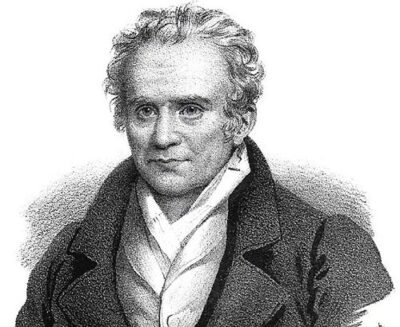
Johann Anton Güldenstädt
Johann Anton Güldenstädt was a Baltic German scientist. Born April 26, 1745, in Riga. Died March 23, 1781, in Saint Petersburg. Positions held include professor. Educated at European University Viadrina.
Facts
20 facts · 2 confirmed by two sources · 4 cited · 14 from one source
Where this comes from
Papalocal keeps its own record. It started from these sources; what each one said is kept here as it was copied, so a change on their side never changes this page by itself. Tap one to read its version.
What Wikidata says · copied November 18, 2026 · revision 2568891652
- Described as
- Baltic German scientist (1745-1781)
- Other names
- Gueldenst.
- Born
- April 26, 1745
- Died
- March 23, 1781
- Born in
- Riga · 1 reference
- Died in
- Saint Petersburg · 1 reference
- Cause of death
- typhus
- Citizen of
- Russian Empire
- Occupation
- explorer; ornithologist; zoologist; botanist; ichthyologist; geographer · 1 reference; naturalist · 1 reference; physician · 1 reference
- Positions held
- professor
- Education
- European University Viadrina
- Member of
- Saint Petersburg Academy of Sciences
- Field
- botany; zoology; linguistics
- Wikipedias with a page
- 22
Wikidata item Q529222 (wikidata.org/wiki/Q529222), public domain (CC0). Copied November 18, 2026.
What Wikipedia says · copied November 18, 2026 · revision 1327845130
Johann Anton Güldenstädt (26 April 1745 in Riga, Latvia – 23 March 1781 in St. Petersburg, Russia) was a Baltic German naturalist and explorer in Russian service.
Güldenstädt lost both his parents early, and from 1763 onwards studied pharmacy, botany and natural history in Berlin. At the age of 22, he obtained his doctorate in medicine at the University of Frankfurt in 1767. In the following year, he joined the Russian Imperial Academy of Sciences' expedition sent by Catherine II of Russia to explore the Russian empire's southern frontier. Güldenstädt travelled through Ukraine and the Astrakhan region, as well as the northern Caucasus and Georgia, both of which were almost entirely beyond the borders of the Russian empire. In March 1775 he returned to St Petersburg. The results of the expedition and Güldenstädt's edited expedition journal were published after his death by Peter Simon Pallas in Reisen durch Russland und im Caucasischen Gebürge (Travels in Russia and the Mountains of the Caucasus) (1787–1791).
The expedition contributed greatly to the fields of biology, geology, geography, and particularly linguistics. Güldenstädt took detailed notes on the languages of the region. After the expedition, which definitively established Güldenstädt's reputation at the Academy, he continued to work as a naturalist.
Güldenstädt's expedition was the first systematic study of the Caucasus. As was typical of contemporary expeditions organized in the spirit of the Enlightenment (including the later American Lewis and Clark Expedition), it was tasked with the observation and description of virtually every aspect of the region under study. This included both its "natural" attributes — flora, fauna, geography, and geology — and its peoples, economy, and government. In this sense it was both a scientific expedition and a mission of reconnaissance to learn more about a region that was important in the simultaneous Russian war with the Ottomans, of which the Caucasus was a theater, with the Georgians acting as Russian allies. Immediately following the expedition, Russian interest in the region, particularly Georgia, grew markedly, culminating in the Treaty of Georgievsk, which made East Georgia a Russian protectorate.
In 1781, he died from an outbreak of fever in St. Petersburg.
- Born, in its opening lines
- April 26, 1745
- Died, in its opening lines
- March 23, 1781
From the Wikipedia article “Johann Anton Güldenstädt” (en.wikipedia.org/wiki/Johann_Anton_Güldenstädt), by its contributors, under CC BY-SA 4.0 (creativecommons.org/licenses/by-sa/4.0/). Copied November 18, 2026; not changed.
Confirmed Two sources agree. Cited One source, and it names where it got it. One source One source, without a reference of its own. Sources disagree The sources disagree. We show the best-supported value and keep theirs below.
