
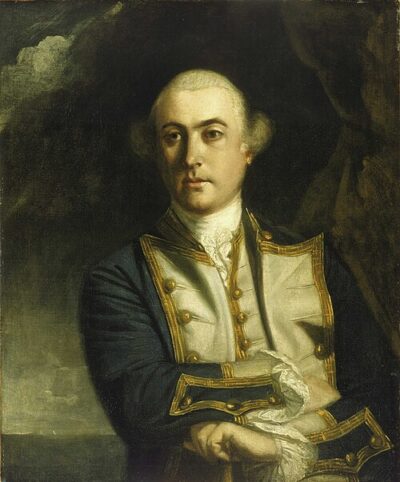
John Byron
John Byron was a British Royal Navy officer and politician;. Born November 8, 1723, in Newstead Abbey. Died April 10, 1786, in London.
Facts
27 facts · 1 confirmed by two sources · 15 cited · 10 from one source · 1 where the sources disagree
What’s different
- Died: we show April 10, 1786 (Sources disagree). Wikipedia says April 1, 1786
Where this comes from
Papalocal keeps its own record. It started from these sources; what each one said is kept here as it was copied, so a change on their side never changes this page by itself. Tap one to read its version.
What Wikidata says · copied November 18, 2026 · revision 2567054758
- Described as
- British Royal Navy officer and politician; (1723-1786)
- Other names
- Byron, John
- Born
- November 8, 1723 · 2 references
- Died
- April 10, 1786 · 6 references
- Born in
- Newstead Abbey · 1 reference
- Died in
- London · 1 reference
- Buried in
- Twickenham
- Citizen of
- Kingdom of Great Britain
- Occupation
- explorer; poet; naval officer; governor · 1 reference; admiral · 1 reference; discoverer · 1 reference
- Spouse
- Sophia Trevannion (1748–) · 2 references
- Children
- John Byron · 1 reference; George Anson Byron · 1 reference; Juliana Elizabeth Byron · 2 references; Frances Byron · 3 references; Augusta Barbara Charlotte Byron · 3 references; Sophia Maria Byron
- Father
- William Byron, 4th Baron Byron · 1 reference
- Mother
- Frances Byron, Baroness Byron · 2 references
- Siblings
- William Byron, 5th Baron Byron · 1 reference; Isabella Byron · 1 reference
- Military branch
- Royal Navy (1731–)
- Military rank
- commodore; vice admiral (1778–); rear admiral (1775–)
- Wikipedias with a page
- 22
Wikidata item Q507665 (wikidata.org/wiki/Q507665), public domain (CC0). Copied November 18, 2026.
What Wikipedia says · copied November 18, 2026 · revision 1358478069
Vice-Admiral of the White John Byron (8 November 1723 – 1 April 1786) was a Royal Navy officer, explorer, and colonial administrator. He earned the nickname "Foul-Weather Jack" in the British press due to his frequent encounters with bad weather at sea. As a midshipman, Byron sailed in a squadron under George Anson on his voyage around the world. However, Byron's ship, HMS Wager, made it only to southern Chile, where it was wrecked. He returned to England with the captain of the ship.
Byron was appointed governor of Newfoundland following Hugh Palliser, who left in 1768. He circumnavigated the world as a commodore with his own squadron in 1764–1766. Byron fought in several battles of the Seven Years' War and the American War of Independence, and rose to vice admiral before he died in 1786. His grandsons include the poet Lord Byron and the admiral and explorer George Byron, 7th Baron Byron. One of Byron's great-granddaughters was the mathematician and pioneer in informatics Ada Lovelace.
- Born, in its opening lines
- November 8, 1723
- Died, in its opening lines
- April 1, 1786
From the Wikipedia article “John Byron” (en.wikipedia.org/wiki/John_Byron), by its contributors, under CC BY-SA 4.0 (creativecommons.org/licenses/by-sa/4.0/). Copied November 18, 2026; not changed.
Confirmed Two sources agree. Cited One source, and it names where it got it. One source One source, without a reference of its own. Sources disagree The sources disagree. We show the best-supported value and keep theirs below.
