
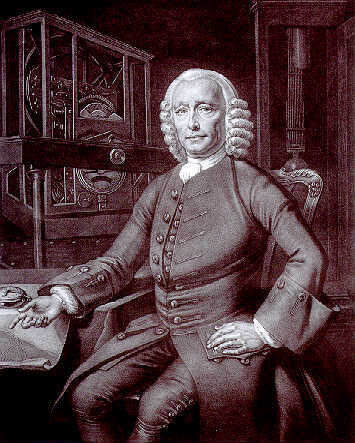
John Harrison
John Harrison was a British clockworker. Born March 24, 1693, in Foulby. Died March 24, 1776, in London. Awards include Copley Medal.
Facts
13 facts · 1 confirmed by two sources · 6 cited · 5 from one source · 1 where the sources disagree
What’s different
- Born: we show March 24, 1693 (Sources disagree). Wikipedia says April 3, 1693
Where this comes from
Papalocal keeps its own record. It started from these sources; what each one said is kept here as it was copied, so a change on their side never changes this page by itself. Tap one to read its version.
What Wikidata says · copied November 16, 2026 · revision 2567719662
- Described as
- British clockworker (1693-1776)
- Born
- March 24, 1693
- Died
- March 24, 1776 · 7 references
- Born in
- Foulby · 1 reference
- Died in
- London · 2 references
- Buried in
- St John-at-Hampstead church · 1 reference
- Citizen of
- Kingdom of Great Britain
- Occupation
- clockmaker; astronomer; inventor · 1 reference; designer · 1 reference; watchmaker · 1 reference
- Awards
- Copley Medal (1749) · 1 reference
- Children
- William Harrison · 1 reference
- Wikipedias with a page
- 48
Wikidata item Q314335 (wikidata.org/wiki/Q314335), public domain (CC0). Copied November 16, 2026.
What Wikipedia says · copied November 16, 2026 · revision 1379697337
John Harrison (3 April 1693 [O.S. 24 March 1692] – 24 March 1776) was an English joiner and clockmaker who invented the marine chronometer, a long-sought device for solving the problem of how to calculate longitude while at sea.
Harrison's solution revolutionized navigation and greatly increased the safety of long-distance sea travel. The problem he solved had been considered so important following the Scilly naval disaster of 1707 that the British Parliament was offering financial rewards of up to £20,000 (equivalent to £3.83 million in 2025) under the 1714 Longitude Act, though Harrison never received the full reward due to political rivalries. He presented his first design in 1730, and worked over many years on improved designs, making several advances in time-keeping technology, finally turning to what were called sea watches. Harrison gained support from the Longitude Board in building and testing his designs. Towards the end of his life, he received recognition and a reward from Parliament.
- Born, in its opening lines
- April 3, 1693
- Died, in its opening lines
- March 24, 1776
From the Wikipedia article “John Harrison” (en.wikipedia.org/wiki/John_Harrison), by its contributors, under CC BY-SA 4.0 (creativecommons.org/licenses/by-sa/4.0/). Copied November 16, 2026; not changed.
Confirmed Two sources agree. Cited One source, and it names where it got it. One source One source, without a reference of its own. Sources disagree The sources disagree. We show the best-supported value and keep theirs below.
