
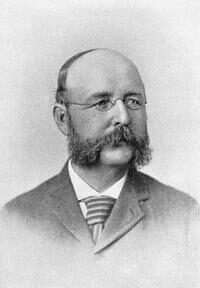
John Knowles Paine
John Knowles Paine was an American composer. Born January 9, 1839, in Portland. Died April 25, 1906, in Cambridge. Known for Centennial Hymn.
Facts
16 facts · 2 confirmed by two sources · 6 cited · 8 from one source
Where this comes from
Papalocal keeps its own record. It started from these sources; what each one said is kept here as it was copied, so a change on their side never changes this page by itself. Tap one to read its version.
What Wikidata says · copied November 18, 2026 · revision 2567362032
- Described as
- American composer (1839–1906)
- Other names
- John K. Paine, John Paine
- Born
- January 9, 1839 · 6 references
- Died
- April 25, 1906 · 6 references
- Born in
- Portland · 1 reference
- Died in
- Cambridge · 1 reference
- Buried in
- Munroe Cemetery · 1 reference
- Citizen of
- United States
- Occupation
- composer · 2 references; music educator; music teacher · 1 reference; organist · 1 reference
- Worked for
- Harvard University
- Member of
- American Academy of Arts and Sciences
- Genre
- opera; symphony
- Instrument
- organ
- Known for
- Centennial Hymn
- Wikipedias with a page
- 17
Wikidata item Q1649745 (wikidata.org/wiki/Q1649745), public domain (CC0). Copied November 18, 2026.
What Wikipedia says · copied November 18, 2026 · revision 1378918424
John Knowles Paine (January 9, 1839 – April 25, 1906) was the first American-born composer to achieve fame for large-scale orchestral music. The senior member of a group of composers collectively known as the Boston Six, Paine was one of those responsible for the first significant body of concert music by composers from the United States. The Boston Six's other five members were Amy Beach, Arthur Foote, Edward MacDowell, George Chadwick, and Horatio Parker.
- Born, in its opening lines
- January 9, 1839
- Died, in its opening lines
- April 25, 1906
From the Wikipedia article “John Knowles Paine” (en.wikipedia.org/wiki/John_Knowles_Paine), by its contributors, under CC BY-SA 4.0 (creativecommons.org/licenses/by-sa/4.0/). Copied November 18, 2026; not changed.
Confirmed Two sources agree. Cited One source, and it names where it got it. One source One source, without a reference of its own. Sources disagree The sources disagree. We show the best-supported value and keep theirs below.
