
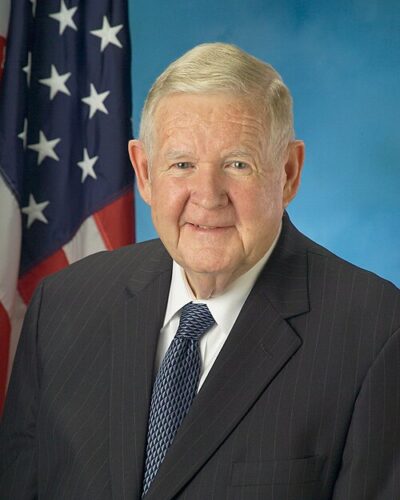
John Murtha
John Murtha was an American politician from the U.S. state of Pennsylvania. Born June 17, 1932, in New Martinsville. Died February 8, 2010, in Arlington County. Positions held include United States representative (1974–2010) and member of the Pennsylvania House of Representatives (1969–1973). Educated at Washington & Jefferson College and University of Pittsburgh. Awards include Bronze Star Medal, Purple Heart and Profile in Courage Award.
Facts
24 facts · 2 confirmed by two sources · 8 cited · 14 from one source
What’s different
- Born: we show June 17, 1932 (Confirmed). Wikidata also lists June 18, 1932
Where this comes from
Papalocal keeps its own record. It started from these sources; what each one said is kept here as it was copied, so a change on their side never changes this page by itself. Tap one to read its version.
What Wikidata says · copied November 16, 2026 · revision 2567176906
- Described as
- American politician from the U.S. state of Pennsylvania (1932-2010)
- Other names
- John Patrick "Jack" Murtha, Jr., John Patrick Murtha, Jr., Jack Murtha, John Patrick Murtha, John Patrick Murtha Jr.
- Born
- June 17, 1932 · 2 references; June 18, 1932 · 2 references
- Died
- February 8, 2010 · 3 references
- Born in
- New Martinsville
- Died in
- Arlington County · 1 reference
- Buried in
- Grandview Cemetery
- Cause of death
- surgical complications
- Citizen of
- United States
- Occupation
- politician · 1 reference; military officer
- Positions held
- United States representative (1974–2010); member of the Pennsylvania House of Representatives (1969–1973)
- Political party
- Democratic Party
- Education
- Washington & Jefferson College; University of Pittsburgh (–1961) · 1 reference; Indiana University of Pennsylvania (–1963) · 1 reference; The Kiski School (1951) · 2 references; University of Pittsburgh at Johnstown · 1 reference
- Awards
- Bronze Star Medal; Purple Heart; Profile in Courage Award (2006) · 1 reference; Eagle Scout · 1 reference
- Religion
- Catholic Church
- Military branch
- United States Marine Corps (2 times) (1952–1967) · 1 reference; United States Marine Corps Reserve (1955–1970) · 1 reference
- Wikipedias with a page
- 20
Wikidata item Q982347 (wikidata.org/wiki/Q982347), public domain (CC0). Copied November 16, 2026.
What Wikipedia says · copied November 16, 2026 · revision 1382931366
John Patrick Murtha Jr. ( MUR-thə; June 17, 1932 – February 8, 2010) was an American politician and Marine Corps officer. A member of the Democratic Party, he represented Pennsylvania's 12th congressional district in the United States House of Representatives from 1974 until his death in 2010. Murtha was the first Vietnam War veteran elected to the U.S. House of Representatives and is the longest-serving member of the chamber ever elected from Pennsylvania.
Murtha was a native of West Virginia and western Pennsylvania. He was a Marine Corps officer in the 1950s and later volunteered for service in the Vietnam War from 1966 to 1967, where he received honors including the Bronze Star Medal and two Purple Hearts. A member of the Pennsylvania House of Representatives from 1969 to 1974, Murtha narrowly won a special election to U.S. Congress in 1974 and was successively reelected every two years until his death.
In the first decade of the 21st century, Murtha had been best known for his calls for a withdrawal of American forces in the Iraq War, as well as questions about his ethics. After the Democrats won control of the House of Representatives in the 2006 midterm elections he made an unsuccessful bid to be elected House Majority Leader during the 110th Congress (2007–2009), losing to Steny Hoyer of Maryland.
- Born, in its opening lines
- June 17, 1932
- Died, in its opening lines
- February 8, 2010
From the Wikipedia article “John Murtha” (en.wikipedia.org/wiki/John_Murtha), by its contributors, under CC BY-SA 4.0 (creativecommons.org/licenses/by-sa/4.0/). Copied November 16, 2026; not changed.
Confirmed Two sources agree. Cited One source, and it names where it got it. One source One source, without a reference of its own. Sources disagree The sources disagree. We show the best-supported value and keep theirs below.
