
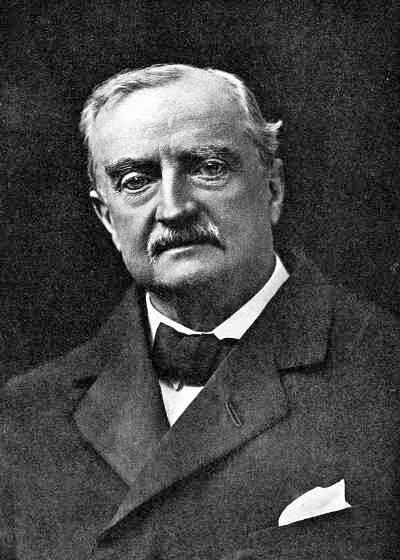
John Redmond
John Redmond was an Irish politician. Born September 1, 1856, in Dublin. Died March 6, 1918, in Dublin. Positions held include member of the 30th Parliament of the United Kingdom (1910–1918), member of the 29th Parliament of the United Kingdom (1910) and member of the 28th Parliament of the United Kingdom (1906–1910). Educated at Clongowes Wood College.
Facts
22 facts · 2 confirmed by two sources · 10 cited · 9 from one source · 1 where the sources disagree
What’s different
- Born in: we show Dublin (Sources disagree). Wikidata also lists County Wexford
Where this comes from
Papalocal keeps its own record. It started from these sources; what each one said is kept here as it was copied, so a change on their side never changes this page by itself. Tap one to read its version.
What Wikidata says · copied November 18, 2026 · revision 2570828305
- Described as
- Irish politician (1856–1918)
- Other names
- John Edward Redmond
- Born
- September 1, 1856 · 4 references
- Died
- March 6, 1918 · 4 references
- Born in
- County Wexford; Dublin · 1 reference
- Died in
- Dublin · 1 reference
- Buried in
- St. John's Cemetery Wexford
- Citizen of
- United Kingdom of Great Britain and Ireland
- Occupation
- politician · 1 reference; barrister
- Positions held
- member of the 30th Parliament of the United Kingdom (1910–1918); member of the 29th Parliament of the United Kingdom (1910) · 1 reference; member of the 28th Parliament of the United Kingdom (1906–1910) · 1 reference; member of the 27th Parliament of the United Kingdom (1900–1906) · 1 reference; member of the 26th Parliament of the United Kingdom (1895–1900) · 1 reference; member of the 25th Parliament of the United Kingdom (1892–1895) · 1 reference; member of the 24th Parliament of the United Kingdom (1886–1892) · 1 reference; member of the 23rd Parliament of the United Kingdom (1885–1886) · 1 reference; member of the 22nd Parliament of the United Kingdom (1881–1885) · 2 references
- Political party
- Irish Parliamentary Party
- Education
- Clongowes Wood College
- Children
- William Redmond
- Father
- William Archer Redmond
- Religion
- Catholic Church
- Wikipedias with a page
- 23
Wikidata item Q225392 (wikidata.org/wiki/Q225392), public domain (CC0). Copied November 18, 2026.
What Wikipedia says · copied November 18, 2026 · revision 1378303539
John Edward Redmond (1 September 1856 – 6 March 1918) was an Irish nationalist politician, barrister, and MP in the House of Commons of the United Kingdom. He was best known as leader of the moderate Irish Parliamentary Party (IPP) from 1900 until his death in 1918. He was also the leader of the paramilitary organisation the Irish National Volunteers (INV).
He was born to an old prominent Catholic family in rural Ireland; several relatives were politicians. He took over control of the minority IPP faction loyal to Charles Stewart Parnell when he died in 1891. Redmond was a conciliatory politician who achieved the two main objectives of his political life: party unity and, in September 1914, the passing of the Government of Ireland Act 1914. The Act granted limited self-government to Ireland, within the United Kingdom. However, implementation of Home Rule was suspended on the outbreak of the First World War. Redmond called on the National Volunteers to join Irish regiments of the New British Army and support the British and Allied war effort to restore the "freedom of small nations" on the European continent, thereby to also ensure the implementation of Home Rule after a war that was expected to be of short duration. However, after the Easter Rising of 1916, Irish public opinion shifted in favour of militant republicanism and full Irish independence, so that his party lost its dominance in Irish politics.
- Born, in its opening lines
- September 1, 1856
- Died, in its opening lines
- March 6, 1918
From the Wikipedia article “John Redmond” (en.wikipedia.org/wiki/John_Redmond), by its contributors, under CC BY-SA 4.0 (creativecommons.org/licenses/by-sa/4.0/). Copied November 18, 2026; not changed.
Confirmed Two sources agree. Cited One source, and it names where it got it. One source One source, without a reference of its own. Sources disagree The sources disagree. We show the best-supported value and keep theirs below.
