
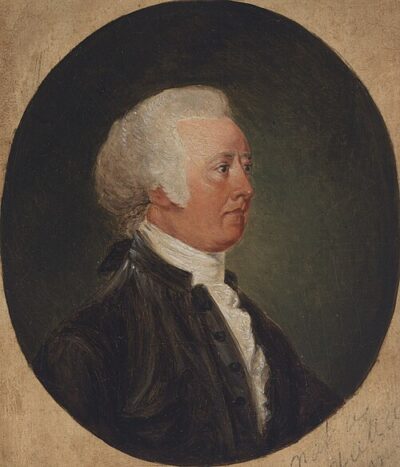
John Rutledge
John Rutledge was a chief justice of the United States in 1795. Born September 17, 1739, in Charleston. Died July 23, 1800, in Charleston. Positions held include Governor of South Carolina (1779–1782), Chief Justice of the United States (1795) and Associate Justice of the Supreme Court of the United States (1790–1791). Educated at Middle Temple.
Facts
24 facts · 1 confirmed by two sources · 11 cited · 11 from one source · 1 where the sources disagree
What’s different
- Died: we show July 23, 1800 (Sources disagree). Wikipedia says June 21, 1800
Where this comes from
Papalocal keeps its own record. It started from these sources; what each one said is kept here as it was copied, so a change on their side never changes this page by itself. Tap one to read its version.
What Wikidata says · copied November 15, 2026 · revision 2567410037
- Described as
- chief justice of the United States in 1795
- Other names
- Dictator John
- Born
- September 17, 1739 · 2 references
- Died
- July 23, 1800 · 2 references
- Born in
- Charleston · 1 reference
- Died in
- Charleston · 1 reference
- Buried in
- St. Michael's Churchyard
- Citizen of
- United States
- Occupation
- judge · 1 reference; lawyer; politician · 1 reference; governor · 1 reference; jurist · 1 reference
- Positions held
- Governor of South Carolina (1779–1782); Chief Justice of the United States (1795); Associate Justice of the Supreme Court of the United States (1790–1791); Delegate to the United States Constitutional Convention (1787) · 1 reference
- Political party
- Federalist Party · 1 reference
- Education
- Middle Temple
- Spouse
- Elizabeth Grimké Rutledge · 1 reference
- Children
- John Rutledge, Jr. · 1 reference; Eliza Rutledge Laurens; Frederick Rutledge, Sr. · 1 reference
- Father
- John Rutledge · 1 reference
- Mother
- Sarah Hext · 1 reference
- Siblings
- Edward Rutledge · 1 reference
- Wikipedias with a page
- 32
Wikidata item Q370781 (wikidata.org/wiki/Q370781), public domain (CC0). Copied November 15, 2026.
What Wikipedia says · copied November 15, 2026 · revision 1384005393
John Rutledge Jr. (September 17, 1739 – June 21, 1800) was an American Founding Father, politician, and jurist who served as one of the original associate justices of the Supreme Court and the second chief justice of the United States. Additionally, he served as the first president of South Carolina and later as its first governor after the Declaration of Independence was signed.
Born in Charleston, South Carolina, Rutledge established a legal career after studying at Middle Temple in the City of London. He was the elder brother of Edward Rutledge, a signatory of the Declaration of Independence. Rutledge served as a delegate to the Stamp Act Congress, which protested taxes imposed on the Thirteen Colonies by the Parliament of Great Britain. He also served as a delegate to the Continental Congress, where he signed the Continental Association, before being elected as governor of South Carolina. He served as governor during much of the American Revolutionary War.
After briefly returning to Congress, Rutledge was appointed to the South Carolina Court of Chancery. He was a delegate to the 1787 Philadelphia Convention, which wrote the United States Constitution. During the convention, he served as chairman of the Committee of Detail, which produced the first full draft of the Constitution. The following year he also participated in the South Carolina convention to ratify the Constitution.
In 1789, President George Washington appointed Rutledge as one of the inaugural associate justices of the Supreme Court of the United States. Rutledge left the Supreme Court in 1791 to become chief justice of the South Carolina Court of Common Pleas and Sessions. He returned to the Supreme Court, this time as chief justice, following the resignation of John Jay in June 1795. As the vacancy came during a long Senate recess, Washington named Rutledge as the new chief justice by a recess appointment. When the Senate reconvened in December 1795, it rejected Rutledge's nomination by a 10–14 vote. Rutledge resigned his commission shortly thereafter and withdrew from public life until his death in 1800. He holds the record for the shortest tenure of any chief justice. His was the first Supreme Court nomination to be rejected by the Senate, and he remains the only "recess appointed" justice not to be subsequently confirmed by the Senate.
- Born, in its opening lines
- September 17, 1739
- Died, in its opening lines
- June 21, 1800
From the Wikipedia article “John Rutledge” (en.wikipedia.org/wiki/John_Rutledge), by its contributors, under CC BY-SA 4.0 (creativecommons.org/licenses/by-sa/4.0/). Copied November 15, 2026; not changed.
Confirmed Two sources agree. Cited One source, and it names where it got it. One source One source, without a reference of its own. Sources disagree The sources disagree. We show the best-supported value and keep theirs below.
