
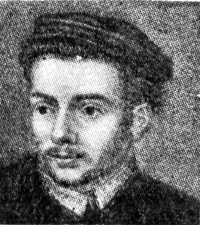
John Skelton
John Skelton was an English poet and tutor. Born 1460, in Kingdom of England. Died June 21, 1529, in Westminster. Positions held include Poet Laureate of the United Kingdom. Known for Speculum principis, Collyn Clout and The Tunning of Elynour Rummyng. Educated at University of Cambridge.
Facts
25 facts · 1 confirmed by two sources · 6 cited · 17 from one source · 1 where the sources disagree
What’s different
- Born: we show 1460 (Sources disagree). Wikipedia says c. 1463
Where this comes from
Papalocal keeps its own record. It started from these sources; what each one said is kept here as it was copied, so a change on their side never changes this page by itself. Tap one to read its version.
What Wikidata says · copied November 18, 2026 · revision 2571569077
- Described as
- English poet and tutor (1463-1529)
- Other names
- John Shelton
- Born
- 1460 · 1 reference
- Died
- June 21, 1529 · 5 references
- Born in
- Kingdom of England · 1 reference
- Died in
- Westminster
- Buried in
- St Margaret's Church, Westminster · 1 reference
- Citizen of
- Kingdom of England
- Occupation
- poet · 1 reference; writer · 2 references; tutor; priest; humanist · 1 reference
- Positions held
- Poet Laureate of the United Kingdom
- Education
- University of Cambridge
- Known for
- Speculum principis; Collyn Clout; The Tunning of Elynour Rummyng; Magnyfycence; Bowge of court; The garland of laurell; Introduction to the basic language; Phyllyp Sparrowe; Speke, parrot; Comedy callyd Achademics
- Field
- poetry · 1 reference; satire · 1 reference
- Wikipedias with a page
- 20
Wikidata item Q638589 (wikidata.org/wiki/Q638589), public domain (CC0). Copied November 18, 2026.
What Wikipedia says · copied November 18, 2026 · revision 1378726101
John Skelton, also known as John Shelton (c. 1463 – 21 June 1529) was an English poet, playwright, priest, and tutor to King Henry VIII. Writing in a period of linguistic transition between Middle English and Early Modern English, Skelton is one of the most important poets of the early Tudor period. As a poet, Skelton is mostly remembered for his invectives and satires, often written in a highly irregular metre now called Skeltonics. However, Skelton's poetic oeuvre (which survives only in part) encompasses a wide range of genres, including dream vision, parody, ballad, panegyric, and Latin elegiac. He also wrote the first secular morality play in English, Magnyfycence, an important landmark in the development of English Renaissance theatre.
Skelton served as a tutor to the young Henry VIII, and lived in his court for much of his adult life. He took up the style of poet laureate, possibly after appointment by Henry, and was rector of Diss for nearly 30 years. Skelton was involved in the Grammarians' War, and, in his last years, came into conflict with Thomas Wolsey. Fearing for his life, he took sanctuary in Westminster, where he died in 1529. He was buried in St. Margaret's Church, although no trace of the tomb remains.
As a poet, Skelton's reputation has been mixed. Though very popular in the decades after his death, by the late 16th century his reputation had declined. Derided by Alexander Pope as "beastly", it was only in the 20th century that his work began to be seen more favorably, where his exponents include W. H. Auden and C. S. Lewis.
- Born, in its opening lines
- c. 1463
- Died, in its opening lines
- June 21, 1529
From the Wikipedia article “John Skelton (poet)” (en.wikipedia.org/wiki/John_Skelton_(poet)), by its contributors, under CC BY-SA 4.0 (creativecommons.org/licenses/by-sa/4.0/). Copied November 18, 2026; not changed.
Confirmed Two sources agree. Cited One source, and it names where it got it. One source One source, without a reference of its own. Sources disagree The sources disagree. We show the best-supported value and keep theirs below.
