
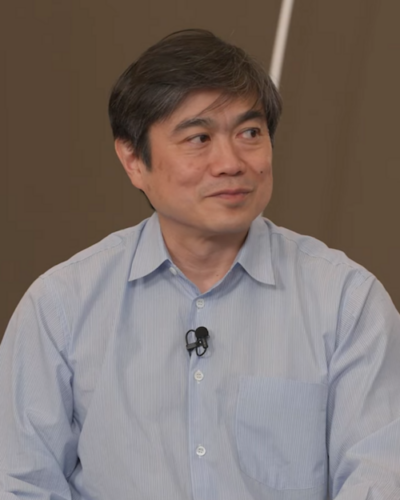
Joi Ito
Joi Ito is a Japanese-American activist, entrepreneur, and venture capitalist. Born June 19, 1966, in Kyoto. Educated at Tufts University and University of Chicago. Awards include OII Lifetime Achievement Award, IRI Medal and Fellow of the American Academy of Arts and Sciences.
Facts
22 facts · 1 confirmed by two sources · 3 cited · 18 from one source
Where this comes from
Papalocal keeps its own record. It started from these sources; what each one said is kept here as it was copied, so a change on their side never changes this page by itself. Tap one to read its version.
What Wikidata says · copied November 18, 2026 · revision 2517692115
- Described as
- Japanese-American activist, entrepreneur, and venture capitalist
- Other names
- Joichi Ito, Jōichi Itō
- Born
- June 19, 1966 · 1 reference
- Born in
- Kyoto
- Citizen of
- United States; Japan
- Occupation
- activist; entrepreneur · 1 reference; venture capitalist; blogger; engineer · 1 reference
- Worked for
- Massachusetts Institute of Technology (2011–2019) · 2 references; Chiba Institute of Technology (2023–) · 2 references
- Education
- Tufts University; University of Chicago; Keio University; Nishimachi International School
- Member of
- American Academy of Arts and Sciences
- Awards
- OII Lifetime Achievement Award (2011); IRI Medal (2017); Fellow of the American Academy of Arts and Sciences
- Siblings
- Mizuko Ito
- Lived in
- Tokyo
- Website
- https://ito.com/
- Wikipedias with a page
- 17
Wikidata item Q934616 (wikidata.org/wiki/Q934616), public domain (CC0). Copied November 18, 2026.
What Wikipedia says · copied November 18, 2026 · revision 1383542705
Joichi Ito (伊藤 穰一, Itō Jōichi; born June 19, 1966) is a Japanese entrepreneur and venture capitalist. He is the president of Chiba Institute of Technology. He is on the board of directors for the Gelephu Mindfulness City in Bhutan where he is also chairman of the Gelephu Investment Development Corporation (GIDC). He is a former director of the MIT Media Lab, former professor of the practice of media arts and sciences at MIT, and a former visiting professor of practice at Harvard Law School.
Ito has received recognition for his role as an entrepreneur focused on Internet and technology companies. He notably founded PSINet Japan, Infoseek Japan, and fintech company Digital Garage. Ito is founder and managing partner of Neoteny and GMJP, an early-stage fund investing in web3 in Japan. He is former board member and CEO of Creative Commons, the Electronic Privacy Information Center (EPIC), the Internet Corporation for Assigned Names and Numbers (ICANN), the Knight Foundation, The New York Times Company, the MacArthur Foundation, the Mozilla Foundation, the Open Source Initiative, the Sony Corporation, the and Common Crawl advisory board. Ito wrote a monthly column in the Ideas section of Wired magazine.
Following the exposure of his financial ties to Jeffrey Epstein, Ito resigned from his roles at MIT, Harvard, the MacArthur and Knight foundations, PureTech Health, and The New York Times Company in September 2019. Scrutiny resurfaced in February 2026 after the U.S. Justice Department release of millions of Epstein-related documents; it was revealed that Ito had a closer relationship with Epstein than previously known. The New York Times reported that Ito was a "prolific correspondent" with Epstein, having exchanged thousands of emails with him, and a "frequent visitor" to Epstein's private island. In early March, Ito stepped down from his role in the Global Startup Campus Initiative, a Japanese government-funded program, and announced he would leave his government advisory role at the Digital Agency’s Digital Society Initiative, and Reuters reported Ito would retire as an executive and board director of Digital Garage.
- Born, in its opening lines
- June 19, 1966
From the Wikipedia article “Joi Ito” (en.wikipedia.org/wiki/Joi_Ito), by its contributors, under CC BY-SA 4.0 (creativecommons.org/licenses/by-sa/4.0/). Copied November 18, 2026; not changed.
Confirmed Two sources agree. Cited One source, and it names where it got it. One source One source, without a reference of its own. Sources disagree The sources disagree. We show the best-supported value and keep theirs below.
