
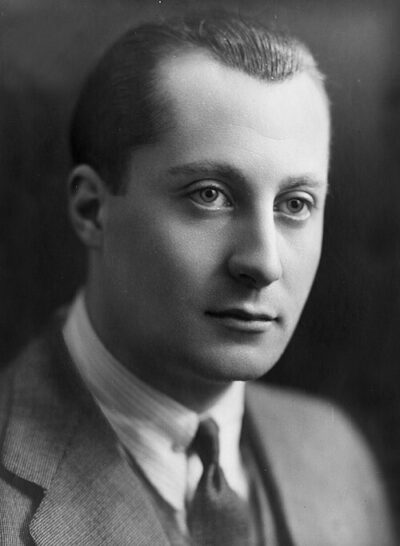
José Antonio Primo de Rivera
José Antonio Primo de Rivera was a Spanish politician and founder of Falange Española. Born April 24, 1903, in Madrid. Died November 20, 1936, in Alicante. Positions held include Member of the Cortes republicanas (1933–1936). Educated at Universidad Central. Awards include Knight of the Order of Santiago.
Facts
26 facts · 2 confirmed by two sources · 9 cited · 15 from one source
Where this comes from
Papalocal keeps its own record. It started from these sources; what each one said is kept here as it was copied, so a change on their side never changes this page by itself. Tap one to read its version.
What Wikidata says · copied November 16, 2026 · revision 2569133459
- Described as
- Spanish politician and founder of Falange Española (1903–1936)
- Other names
- José Antonio, José Antonio Primo de Rivera y Sáenz de Heredia, polmj
- Born
- April 24, 1903 · 7 references
- Died
- November 20, 1936 · 9 references
- Born in
- Madrid · 4 references
- Died in
- Alicante · 3 references
- Buried in
- San Isidro Cemetery (2023–) · 1 reference
- Cause of death
- gunshot wound
- Name at birth
- José Antonio Primo de Rivera y Sáenz de Heredia
- Citizen of
- Spain
- Occupation
- politician · 4 references; poet; advocate; lawyer · 3 references; falangist
- Positions held
- Member of the Cortes republicanas (1933–1936) · 1 reference
- Political party
- Unión Monárquica Nacional; Falange Española (1933–1934); Falange Española de las JONS (1934–1936)
- Education
- Universidad Central
- Awards
- Knight of the Order of Santiago (1928) · 2 references
- Father
- Miguel Primo de Rivera, 2nd Marquis of Estella · 1 reference
- Mother
- Casilda Sáenz de Heredia
- Siblings
- Pilar Primo de Rivera · 1 reference; Fernando Primo de Rivera y Sáenz de Heredia; Miguel Primo de Rivera y Sáenz de Heredia; Carmen Primo de Rivera
- Religion
- Catholic Church
- Wikipedias with a page
- 56
Wikidata item Q57681 (wikidata.org/wiki/Q57681), public domain (CC0). Copied November 16, 2026.
What Wikipedia says · copied November 16, 2026 · revision 1380094949
José Antonio Primo de Rivera y Sáenz de Heredia, 1st Duke of Primo de Rivera, 3rd Marquis of Estella GE (24 April 1903 – 20 November 1936), often referred to simply as José Antonio, was a Spanish national syndicalist politician who founded the Falange Española ("Spanish Phalanx"), later Falange Española de las JONS.
José Antonio was the eldest son of General Miguel Primo de Rivera (2nd Marquess of Estella), dictator of Spain from 1923 to 1930. He worked as a lawyer from 1927 to 1933 before entering politics through the National Monarchist Union, an enterprise he initially engaged in because of his vows to defend his recently deceased father's memory. After becoming disillusioned with the traditionalist monarchist policies, he founded the short lived Movimiento Español Sindicalista alongside Julio Ruiz de Alda. Soon after he founded Falange Española in October 1933, shortly before running as a candidate in the 1933 general election, in which he won a seat in the Congress of Deputies of the Second Spanish Republic. He assumed the role of messianic leader and charged himself with the task of saving Spain in founding a national syndicalist party, but he encountered difficulties widening his support base during his entire political life.
In 1936, he endorsed the Spanish nationalist military coup against the Second Spanish Republic that led to a civil war that he later attempted to stop. Imprisoned before the start of the war, he was accused of conspiracy and military rebellion against the government of the republic and was sentenced to death and executed by firing squad during the first months of the war.
In life, he held the nobiliary title of 3rd Marquis of Estella, Grandee of Spain. In 1948, he was posthumously given the title of Duke of Primo de Rivera, which was subsequently passed to his brother Miguel. The image of José Antonio was revered during the war by the Nationalist faction, and after the establishment of Francoist Spain he was regarded as a martyr, and used as a tool of the Francoist propaganda apparatus. The inscription of "José Antonio ¡Presente!" could be found in many churches all across Spain.
- Born, in its opening lines
- April 24, 1903
- Died, in its opening lines
- November 20, 1936
From the Wikipedia article “José Antonio Primo de Rivera” (en.wikipedia.org/wiki/José_Antonio_Primo_de_Rivera), by its contributors, under CC BY-SA 4.0 (creativecommons.org/licenses/by-sa/4.0/). Copied November 16, 2026; not changed.
Confirmed Two sources agree. Cited One source, and it names where it got it. One source One source, without a reference of its own. Sources disagree The sources disagree. We show the best-supported value and keep theirs below.
