
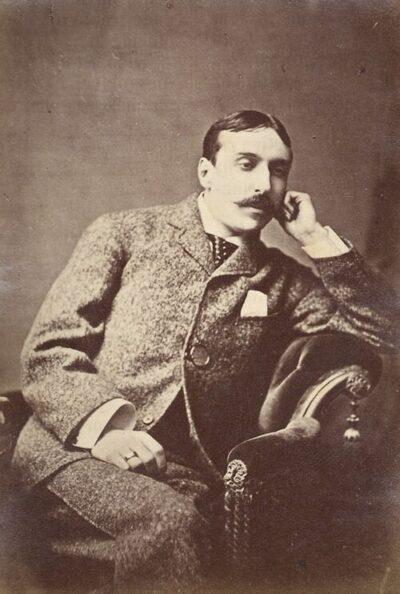
José Maria de Eça de Queirós
José Maria de Eça de Queirós was a Portuguese writer and diplomat. Born November 25, 1845, in Póvoa de Varzim. Died August 16, 1900, in Paris. Positions held include ambassador. Known for O Crime do Padre Amaro and Os Maias. Educated at Law School of the University of Coimbra.
Facts
18 facts · 2 confirmed by two sources · 4 cited · 12 from one source
Where this comes from
Papalocal keeps its own record. It started from these sources; what each one said is kept here as it was copied, so a change on their side never changes this page by itself. Tap one to read its version.
What Wikidata says · copied November 16, 2026 · revision 2570019080
- Described as
- Portuguese writer and diplomat (1845–1900)
- Other names
- José Maria Eça de Queiroz
- Born
- November 25, 1845 · 15 references
- Died
- August 16, 1900 · 16 references
- Born in
- Póvoa de Varzim · 1 reference
- Died in
- Paris · 2 references
- Buried in
- Church of Santa Engrácia (2025–) · 1 reference
- Cause of death
- tuberculosis
- Name at birth
- José Maria de Eça de Queiroz
- Citizen of
- Kingdom of Portugal
- Occupation
- journalist; diplomat; writer · 4 references; novelist
- Positions held
- ambassador
- Education
- Law School of the University of Coimbra
- Known for
- O Crime do Padre Amaro; Os Maias · 1 reference
- Children
- António Eça de Queiroz
- Website
- http://www.feq.pt/
- Wikipedias with a page
- 55
Wikidata item Q316327 (wikidata.org/wiki/Q316327), public domain (CC0). Copied November 16, 2026.
What Wikipedia says · copied November 16, 2026 · revision 1385425990
José Maria de Eça de Queiroz or Queirós (European Portuguese: [ˈɛsɐ ðɨ kɐjˈɾɔʃ]; 25 November 1845 – 16 August 1900) was a Portuguese author, journalist and diplomat.
Born in northern Portugal, he earned a law degree from the University of Coimbra before being appointed a local administrative official in Leiria, the town that would later serve as the setting of his breakthrough novel in the realist style, The Crime of Father Amaro. He then embarked on a diplomatic career as Portuguese consul in Havana, Newcastle upon Tyne, Bristol and Paris, where he died in 1900, aged 54.
The beginnings of his literary career are inextricably linked to his role as a leading member of the Generation of '70, alongside such figures as Antero de Quental and Oliveira Martins, a group of young radical intellectuals committed to artistic reform who denounced late Portuguese Romanticism as outmoded and intellectually barren. Eça's works, modelled on French Realism and Zola's scientifically minded naturalist school, chronicle his country's cultural decline and ennui during the last decades of the Portuguese monarchy. They are often satirical in tone, inasmuch as they are set against the backdrop of, and wryly interrogate, the bourgeois social mores, hypocrisies and institutions of late-19th-century Portugal. As in much of realist literature, adultery and sexuality are recurring themes. They also frequently contain an anticlerical streak, lampooning what he and his fellow members of the Generation of '70 believed to be the Catholic Church's deleterious influence on Portuguese society in fostering cultural stagnation and complacency, and helping preserve a conservative social order.
Eça de Queiroz is generally considered the greatest Portuguese writer in the realist style, and regarded across the Portuguese-speaking world as one of its literary greats. Zola considered him greater than Flaubert himself. In the London Observer, Jonathan Keates ranked him alongside Dickens, Balzac and Tolstoy.
- Born, in its opening lines
- November 25, 1845
- Died, in its opening lines
- August 16, 1900
From the Wikipedia article “Eça de Queiroz” (en.wikipedia.org/wiki/Eça_de_Queiroz), by its contributors, under CC BY-SA 4.0 (creativecommons.org/licenses/by-sa/4.0/). Copied November 16, 2026; not changed.
Confirmed Two sources agree. Cited One source, and it names where it got it. One source One source, without a reference of its own. Sources disagree The sources disagree. We show the best-supported value and keep theirs below.
