
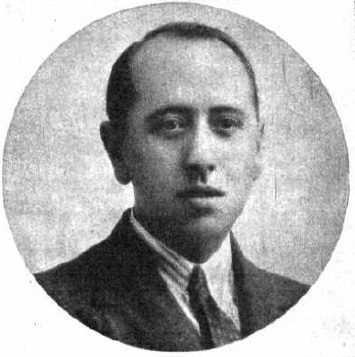
José María Gil-Robles y Quiñones
José María Gil-Robles y Quiñones was a Spanish politician. Born November 22, 1898, in Salamanca. Died September 13, 1980, in Madrid. Positions held include ministro de la Guerra (1935), Member of the Cortes republicanas (1931–1939) and full professor. Educated at University of Salamanca and Universidad Central. Awards include Grand Cross of the Order of St. Raymond of Peñafort.
Facts
28 facts · 1 confirmed by two sources · 10 cited · 16 from one source · 1 where the sources disagree
What’s different
- Born: we show November 22, 1898 (Sources disagree). Wikipedia says November 27, 1898
- Died: we show September 13, 1980 (Confirmed). Wikidata also lists September 14, 1980
Where this comes from
Papalocal keeps its own record. It started from these sources; what each one said is kept here as it was copied, so a change on their side never changes this page by itself. Tap one to read its version.
What Wikidata says · copied November 18, 2026 · revision 2565541136
- Described as
- Spanish politician (1898-1980)
- Other names
- José María Gil-Robles, Jose Maria Gil-Robles, José María Gil-Robles y Quiñones de León
- Born
- November 22, 1898 · 3 references
- Died
- September 14, 1980 · 9 references; September 13, 1980 · 1 reference
- Born in
- Salamanca · 3 references
- Died in
- Madrid · 3 references
- Buried in
- La Almudena Cemetery
- Citizen of
- Spain
- Occupation
- politician · 3 references; writer; jurist; university teacher; journalist; lawyer · 3 references
- Positions held
- ministro de la Guerra (1935) · 1 reference; Member of the Cortes republicanas (1931–1939) · 1 reference; full professor
- Political party
- Spanish Confederation of the Autonomous Right
- Worked for
- University of La Laguna; University of Oviedo
- Education
- University of Salamanca (1919) · 1 reference; Universidad Central (1922) · 1 reference
- Member of
- Privy Council of the Count of Barcelona; Catholic Association of Propagandists (1920–)
- Awards
- Grand Cross of the Order of St. Raymond of Peñafort (1998) · 1 reference
- Children
- Álvaro Gil-Robles · 1 reference; José María Gil-Robles y Gil-Delgado · 1 reference
- Father
- Enrique Gil Robles
- Religion
- Catholic Church
- Lived in
- apartments of the architect Ricardo García Guereta (1952–1980) · 1 reference
- Wikipedias with a page
- 24
Wikidata item Q504061 (wikidata.org/wiki/Q504061), public domain (CC0). Copied November 18, 2026.
What Wikipedia says · copied November 18, 2026 · revision 1380019299
José María Gil-Robles y Quiñones de León (Salamanca, 27 November 1898 – Madrid, 13 September 1980) was a Spanish politician, leader of the CEDA, Spain's first mass and modern right-wing party, and a prominent figure in the period leading up to the Spanish Civil War. Under his leadership at the age of 34, CEDA became the largest political party in the second republican Cortes (1933–1935) with just over one quarter of the seats.
Continually denied the invitation to form government, he served as Minister of War from May to December 1935, where he promoted Generals Emilio Mola and Francisco Franco to influential positions. In the 1936 elections, the CEDA was defeated, and support for Gil-Robles and his party evaporated. Gil-Robles was unwilling to struggle with Francisco Franco for power and in April 1937, he announced the dissolution of CEDA, and went into exile during the years 1936-1953 and again from 1962-1964. Abroad, he negotiated with Spanish monarchists to try to arrive at a common strategy for taking power in Spain.
After returning to Spain, in 1964, he was named a professor of the University of Oviedo and published his memoir No fue posible la paz ('Peace Was Not Possible') with a thesis that despite his efforts to operate within the constitutional framework of the Republic, structural and ideological extremism on both the left and right made a peaceful, democratic resolution impossible.
After the death of Franco and the end of his regime, Gil-Robles became one of the leaders of the "Spanish Christian Democracy" party, which however failed to win support in the Spanish general elections in 1977.
- Born, in its opening lines
- November 27, 1898
- Died, in its opening lines
- September 13, 1980
From the Wikipedia article “José María Gil-Robles y Quiñones” (en.wikipedia.org/wiki/José_María_Gil-Robles_y_Quiñones), by its contributors, under CC BY-SA 4.0 (creativecommons.org/licenses/by-sa/4.0/). Copied November 18, 2026; not changed.
Confirmed Two sources agree. Cited One source, and it names where it got it. One source One source, without a reference of its own. Sources disagree The sources disagree. We show the best-supported value and keep theirs below.
