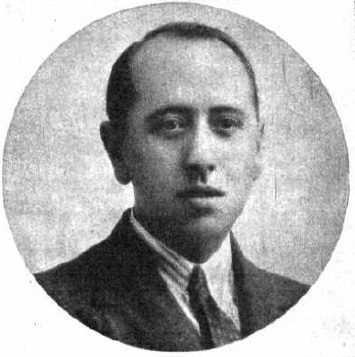
Spanish Confederation of the Autonomous Right
Spanish Confederation of the Autonomous Right is a political party. It was founded in 1933. Its headquarters are in Madrid. It stands for conservatism, Christian right and antiliberalism.
- Country
- Spain
- Founded
- March 4, 1933
- Ideology
- conservatism
All 11 facts, and where they come from
Facts
11 facts · 0 confirmed by two sources · 0 cited · 11 from one source
Where this comes from
Papalocal keeps its own record. It started from these sources; what each one said is kept here as it was copied, so a change on their side never changes this page by itself. Tap one to read its version.
What Wikidata says · copied November 18, 2026 · revision 2510402205
- Described as
- political party
- Other names
- CEDA
- What it is
- political party
- Followed by
- Falange Española Tradicionalista y de las JONS
- Founded
- March 4, 1933
- Ended
- April 19, 1937
- Headquarters
- Madrid
- Country
- Spain
- Chair
- José María Gil-Robles y Quiñones (1933–1937)
- Ideology
- conservatism; Christian right; antiliberalism; Spanish nationalism
- Wikipedias with a page
- 24
Wikidata item Q1124888 (wikidata.org/wiki/Q1124888), public domain (CC0). Copied 2026-11-18.
What Wikipedia says · copied November 18, 2026 · revision 1379786001
The Confederación Española de Derechas Autónomas (lit. 'Spanish Confederation of Autonomous Rights'; sometimes translated as Spanish Confederation of Autonomous Right-wing Groups; CEDA) was a short-lived, right-wing political party in the Second Spanish Republic. A Catholic force, it was the political heir to Ángel Herrera Oria's Acción Popular. Their political goal was replacing liberal democracy by a corporatist order. As such, they advocated for an authoritarian and corporatist State shaped after the Church's social doctrine.
The CEDA won a plurality in the 1933 legislative election, and then provided parliamentary support to Radical governments. The party represented the interests of the Catholic voters as well as the rural population of Spain, most prominently the medium and small peasants and landowners. The party sought the restoration of the powerful role of the Catholic Church that existed in Spain before the establishment of the Republic, and based their program solely on Catholic teaching, calling for land redistribution and industrial reform based on the distributist and corporatist ideals of rerum novarum and quadragesimo anno.
From the Wikipedia article “CEDA” (en.wikipedia.org/wiki/CEDA), by its contributors, under CC BY-SA 4.0 (creativecommons.org/licenses/by-sa/4.0/). Copied 2026-11-18; not changed.
Confirmed Two sources agree. Cited One source, and it names where it got it. One source One source, without a reference of its own. Sources disagree The sources disagree. We show the best-supported value and keep theirs below.