
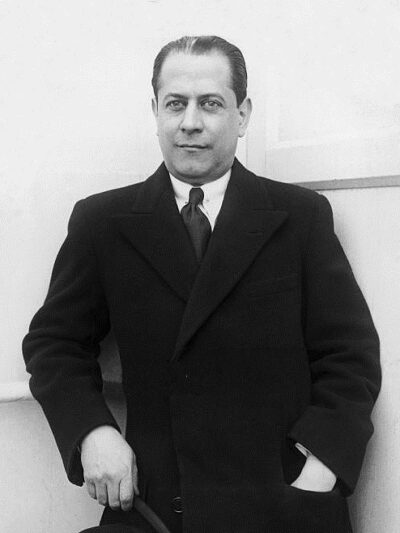
José Raúl Capablanca
José Raúl Capablanca was a Cuban chess player. Born November 19, 1888, in Havana. Died March 8, 1942, in New York City. Educated at Columbia University and Fu Foundation School of Engineering and Applied Science. Awards include world chess champion.
Facts
19 facts · 2 confirmed by two sources · 5 cited · 12 from one source
Where this comes from
Papalocal keeps its own record. It started from these sources; what each one said is kept here as it was copied, so a change on their side never changes this page by itself. Tap one to read its version.
What Wikidata says · copied November 16, 2026 · revision 2569282975
- Described as
- Cuban chess player (1888-1942)
- Other names
- Jose Raul Capablanca, J. R. Capablanca
- Born
- November 19, 1888 · 2 references
- Died
- March 8, 1942 · 9 references
- Born in
- Havana · 2 references
- Died in
- New York City · 2 references
- Buried in
- Colón Cemetery, Havana
- Cause of death
- brain ischemia
- Citizen of
- Cuba (1898–1942)
- Occupation
- chess player · 1 reference; non-fiction writer; diplomat
- Education
- Columbia University; Fu Foundation School of Engineering and Applied Science
- Sport
- chess
- Awards
- world chess champion (1921–1927)
- Field
- chess · 1 reference; diplomacy · 1 reference
- Spouse
- Gloria Simoni Betancourt; Olga Capablanca
- Siblings
- Hilda Juliana Capablanca Graupera
- Wikipedias with a page
- 89
Wikidata item Q160702 (wikidata.org/wiki/Q160702), public domain (CC0). Copied November 16, 2026.
What Wikipedia says · copied November 16, 2026 · revision 1385544049
José Raúl Capablanca y Graupera (19 November 1888 – 8 March 1942) was a Cuban chess player who was the third world chess champion from 1921 to 1927. A chess prodigy, he was widely renowned for his exceptional endgame skill and speed of play.
Capablanca was born in 1888 in the Castillo del Príncipe, Havana. He beat Cuban champion Juan Corzo in a match on 17 November 1901, two days before his 13th birthday. His victory over Frank Marshall in a 1909 match earned him an invitation to the 1911 San Sebastián tournament, which he won ahead of players such as Akiba Rubinstein, Aron Nimzowitsch and Siegbert Tarrasch. Over the next several years, Capablanca had a strong series of tournament results. After several unsuccessful attempts to arrange a match with then world champion Emanuel Lasker, Capablanca finally won the world chess champion title from Lasker in 1921. Capablanca was undefeated from February 10, 1916, to March 21, 1924, a period that included the world championship match with Lasker.
Capablanca lost the title in 1927 to Alexander Alekhine, who had never beaten Capablanca before the match. Following unsuccessful attempts to arrange a rematch over many years, relations between them became bitter. Capablanca continued his excellent tournament results in this period but withdrew from serious chess in 1931. He made a comeback in 1934, with good results, but also showed symptoms of high blood pressure. He died in 1942 of a brain hemorrhage.
Capablanca excelled in simple positions and endgames; Bobby Fischer said he had "a real light touch". He could play tactical chess when necessary, and had good defensive technique. He wrote several chess books during his career, of which Chess Fundamentals was regarded by Mikhail Botvinnik as the best chess book ever written. Capablanca preferred not to present detailed analysis but focused on critical moments in a game. His style of chess influenced the play of future world champions Bobby Fischer and Anatoly Karpov.
- Born, in its opening lines
- November 19, 1888
- Died, in its opening lines
- March 8, 1942
From the Wikipedia article “José Raúl Capablanca” (en.wikipedia.org/wiki/José_Raúl_Capablanca), by its contributors, under CC BY-SA 4.0 (creativecommons.org/licenses/by-sa/4.0/). Copied November 16, 2026; not changed.
Confirmed Two sources agree. Cited One source, and it names where it got it. One source One source, without a reference of its own. Sources disagree The sources disagree. We show the best-supported value and keep theirs below.
