
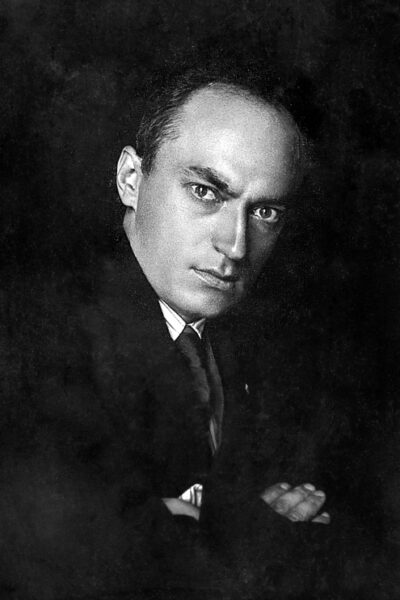
Kálmán Kalocsay
Kálmán Kalocsay was a physician, writer of Esperanto literature. Born October 6, 1891, in Abaújszántó. Died February 27, 1976, in Budapest. Educated at Eötvös Loránd University.
Facts
21 facts · 2 confirmed by two sources · 12 cited · 7 from one source
Where this comes from
Papalocal keeps its own record. It started from these sources; what each one said is kept here as it was copied, so a change on their side never changes this page by itself. Tap one to read its version.
What Wikidata says · copied November 16, 2026 · revision 2569021563
- Described as
- physician, writer of Esperanto literature (1891–1976)
- Other names
- Kalman Kalocsay
- Born
- October 6, 1891 · 3 references
- Died
- February 27, 1976 · 1 reference
- Born in
- Abaújszántó · 1 reference
- Died in
- Budapest · 1 reference
- Citizen of
- Hungary
- Occupation
- infectious disease physician; poet; translator · 1 reference; Esperantist (1911–); physician · 2 references; university teacher · 2 references; writer · 1 reference
- Worked for
- Nyugat; Saint Ladislaus Hospital (1920–)
- Education
- Eötvös Loránd University (–1916)
- Member of
- Academy of Esperanto (1949–1976) · 1 reference
- Field
- medicine · 1 reference; creative and professional writing · 1 reference; poetry · 1 reference; Esperanto · 1 reference; translation · 1 reference
- Wikipedias with a page
- 32
Wikidata item Q12628 (wikidata.org/wiki/Q12628), public domain (CC0). Copied November 16, 2026.
What Wikipedia says · copied November 16, 2026 · revision 1381133528
Kálmán Kalocsay (Hungarian pronunciation: [ˈkaːlmaːn ˈkɒlot͡ʃɒi]; 6 October 1891 in Abaújszántó – 27 February 1976) was a Hungarian Esperantist poet, translator, and editor who significantly influenced Esperanto culture, both in its literature and in the language itself, through his original poetry and his translations of literary works from his native Hungarian and other languages of Europe. His name is sometimes Esperantized as Kolomano Kaloĉajo, and some of his work was published under various pseudonyms, including C.E.R. Bumy, Kopar, Alex Kay, K. Stelov, Malice Pik and Peter Peneter.
Kalocsay studied medicine and later became a surgeon and the chief infectious disease specialist at a major Budapest hospital. He learned both Esperanto and its breakaway dialect Ido in his adolescence, but became more inclined towards Esperanto after he had seen its greater literary potential. In 1921 his first original collection of poems, Mondo kaj Koro (“World and heart”) was published. A further decade passed before the appearance of his collection Streĉita Kordo (“A taut string”), which many Esperantists consider one of the finest collections of original Esperanto poetry, and Rimportretoj (“Portraits in rhyme”), witty poems in rondel style about various people then prominent in the Esperanto movement. In 1932, under the pseudonym Peter Peneter, he published Sekretaj Sonetoj (“Secret sonnets”), a book of erotic verse.
In addition to being a prolific author of Esperanto works, Kalocsay guided the Esperanto literary world through a magazine and publishing house called Literatura Mondo (“Literary world”). A group of writers who coalesced around this magazine during the 1920s and 1930s were known as the "Budapest school" (Budapeŝta skolo).
Works of Kalocsay about literary and linguistic theory include the expansive Plena Gramatiko de Esperanto (“Complete grammar of Esperanto”) and Parnasa Gvidlibro (“Handbook of Parnassus”), a work on Esperanto poetics co-authored with Gaston Waringhien, and an academic style guide for Esperanto, Lingvo – Stilo – Formo (“Language, style and form”). Kalocsay also co-compiled the two-volume Enciklopedio de Esperanto (“Encyclopædia of Esperanto”).
Much was written about Kalocsay by his literary executor Ada Csiszár, after whose death the estate passed to the Esperanto Museum of the Austrian National Library.
- Born, in its opening lines
- October 6, 1891
- Died, in its opening lines
- February 27, 1976
From the Wikipedia article “Kálmán Kalocsay” (en.wikipedia.org/wiki/Kálmán_Kalocsay), by its contributors, under CC BY-SA 4.0 (creativecommons.org/licenses/by-sa/4.0/). Copied November 16, 2026; not changed.
Confirmed Two sources agree. Cited One source, and it names where it got it. One source One source, without a reference of its own. Sources disagree The sources disagree. We show the best-supported value and keep theirs below.
