

Esperanto
Esperanto is an international auxiliary language designed by L. L. Zamenhof. It came out in 1887.
- Came out
- July 26, 1887
- Created by
- L. L. Zamenhof
- Country of origin
- Russian Empire
All 9 facts, and where they come from
Facts
9 facts · 0 confirmed by two sources · 2 cited · 7 from one source
Where this comes from
Papalocal keeps its own record. It started from these sources; what each one said is kept here as it was copied, so a change on their side never changes this page by itself. Tap one to read its version.
What Wikidata says · copied November 17, 2026 · revision 2567560780
- Described as
- international auxiliary language designed by L. L. Zamenhof
- Other names
- Esperanto language, eo, epo
- What it is
- planned language · 1 reference; international auxiliary language; a posteriori language
- Created by
- L. L. Zamenhof · 4 references
- Country of origin
- Russian Empire
- Comes after
- Proto-Esperanto
- Came out
- July 26, 1887 · 1 reference
- Country
- Esperantujo
- Named after
- Doktoro Esperanto
- Wikipedias with a page
- 283
Wikidata item Q143 (wikidata.org/wiki/Q143), public domain (CC0). Copied 2026-11-17.
What Wikipedia says · copied November 17, 2026 · revision 1385861022
Esperanto (; Esperanto: [espeˈranto]) is the world's most widely spoken constructed auxiliary language. Created by L. L. Zamenhof in 1887 as 'the International Language' (la Lingvo Internacia), it is intended to be a universal second language for international communication. Esperanto culture is grounded in the idea that people can interact on an equal footing across language barriers, without linguistic hierarchies, and with respect for linguistic and cultural diversity. Zamenhof described the language in Dr. Esperanto's International Language (known as Unua Libro, the 'first book'), which he published under the pseudonym Doktoro Esperanto. Early adopters of the language liked the name Esperanto ('one who hopes') so much, they soon used it to describe the language itself.
Within the range of constructed languages, Esperanto occupies a middle ground between "naturalistic" (imitating existing natural languages) and a priori (where features are not based on existing languages). Esperanto's vocabulary, syntax, and semantics derive predominantly from languages of the Indo-European group. A substantial majority of its vocabulary (approximately 80%) derives from Romance languages, but it also contains elements derived from Germanic, Greek, and Slavic languages. One of the language's most notable features is its extensive system of derivation, where prefixes and suffixes may be freely combined with roots to generate words, making it possible to communicate effectively with a smaller set of words.
Esperanto is the most successful constructed international auxiliary language and the only such language with a sizeable population of native speakers (denaskuloj), of which there are an estimated 2,000. Esperanto speakers are often called Esperantists (Esperantistoj). Usage estimates are difficult, but two estimates put the number of Esperantists at around 100,000. Concentration of speakers is highest in Europe, East Asia, and South America. Although no country has adopted Esperanto officially, Esperantujo ('Esperanto land') is used as a name for the collection of places where it is spoken. The language has gained a presence on the Internet and is accessible on platforms such as Wikipedia, Amikumu, Google Translate, and Duolingo.
Esperanto largely replaced Volapük in the 19th and 20th centuries as the most major international auxiliary language, as many previous Volapükists switched to Esperanto due to its much simpler language structure. A number of reforms to Esperanto, including an official 1894 proposal by Zamenhof, gender reforms, and "child" languages known as Esperantidos, have been proposed over the years.
From the Wikipedia article “Esperanto” (en.wikipedia.org/wiki/Esperanto), by its contributors, under CC BY-SA 4.0 (creativecommons.org/licenses/by-sa/4.0/). Copied 2026-11-17; not changed.
Confirmed Two sources agree. Cited One source, and it names where it got it. One source One source, without a reference of its own. Sources disagree The sources disagree. We show the best-supported value and keep theirs below.
Picture: Wikimedia Commons: Flag of Esperanto (NCS).svg · See Commons file page
People connected 13
Field
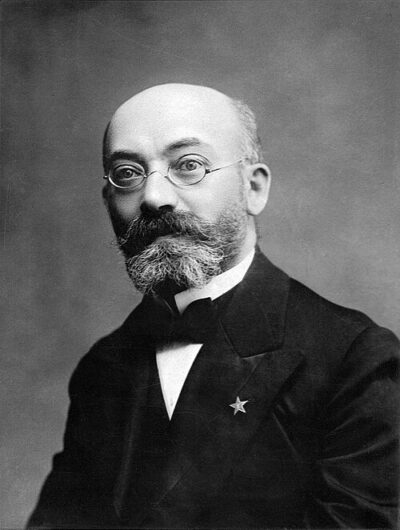 L. L. ZamenhofPolish-Jewish physician and inventor of Esperanto (1859-1917)
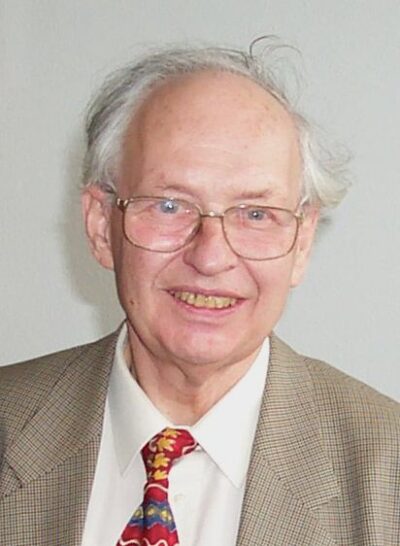 Reinhard SeltenGerman economist (1930-2016)
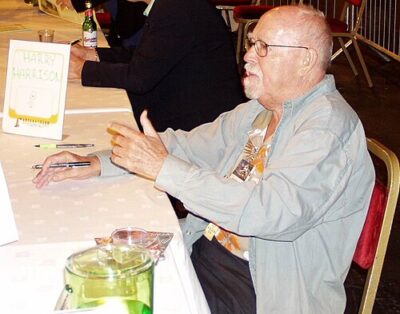 Harry HarrisonAmerican science fiction author (1925–2012)
 Nikolai MarrGeorgian ethnologist and linguist (1864–1934)
 Boris Kolkerlanguage teacher, translator
 Marjorie BoultonBritish writer (1924–2017)
 Liisi OtermaFinnish astronomer
 Frigyes KarinthyHungarian writer (1887–1938)
 Silvio GesellGerman-Argentine economist (1862–1930)
 William AuldScottish poet, author, translator (1924–2006)
 Claude PironSwiss translator and Esperantist (1931-2008)
 Kálmán Kalocsayphysician, writer of Esperanto literature (1891–1976)
 Julio BaghyHungarian actor, author, novelist, poet, publisher and Esperantist (1891-1967)
