
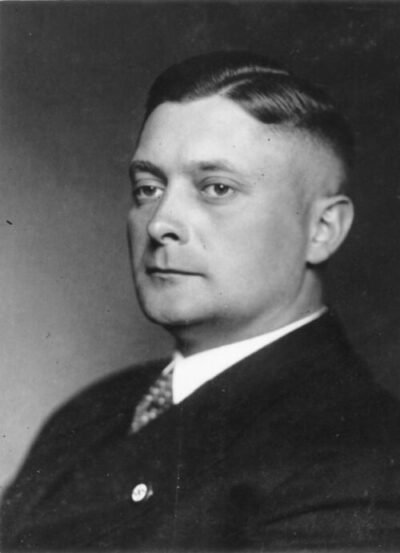
Karl Kaufmann
Karl Kaufmann was a German politician. Born October 10, 1900, in Krefeld. Died December 4, 1969, in Hamburg. Positions held include member of the Reichstag of the Weimar Republic, member of the Reichstag of Nazi Germany and member of Landtag of Prussia.
Facts
15 facts · 2 confirmed by two sources · 4 cited · 9 from one source
Where this comes from
Papalocal keeps its own record. It started from these sources; what each one said is kept here as it was copied, so a change on their side never changes this page by itself. Tap one to read its version.
What Wikidata says · copied November 18, 2026 · revision 2571578908
- Described as
- German politician (1900-1969)
- Born
- October 10, 1900 · 1 reference
- Died
- December 4, 1969 · 1 reference
- Born in
- Krefeld · 1 reference
- Died in
- Hamburg · 1 reference
- Citizen of
- Germany
- Occupation
- politician · 2 references; Gauleiter (1928–1945); Reichsstatthalter
- Positions held
- member of the Reichstag of the Weimar Republic; member of the Reichstag of Nazi Germany; member of Landtag of Prussia
- Political party
- Nazi Party · 1 reference
- Member of
- Schutzstaffel · 1 reference; Deutschvölkischer Schutz und Trutzbund
- Military rank
- Obergruppenführer · 1 reference
- Wikipedias with a page
- 20
Wikidata item Q62916 (wikidata.org/wiki/Q62916), public domain (CC0). Copied November 18, 2026.
What Wikipedia says · copied November 18, 2026 · revision 1347708365
Karl Kaufmann (10 October 1900 – 4 December 1969) was a German politician who served as a Nazi Party Gauleiter from 1925 to 1945 and as the Reichsstatthalter (Reich Governor) of Hamburg from 1933 to 1945.
- Born, in its opening lines
- October 10, 1900
- Died, in its opening lines
- December 4, 1969
From the Wikipedia article “Karl Kaufmann” (en.wikipedia.org/wiki/Karl_Kaufmann), by its contributors, under CC BY-SA 4.0 (creativecommons.org/licenses/by-sa/4.0/). Copied November 18, 2026; not changed.
Confirmed Two sources agree. Cited One source, and it names where it got it. One source One source, without a reference of its own. Sources disagree The sources disagree. We show the best-supported value and keep theirs below.
