
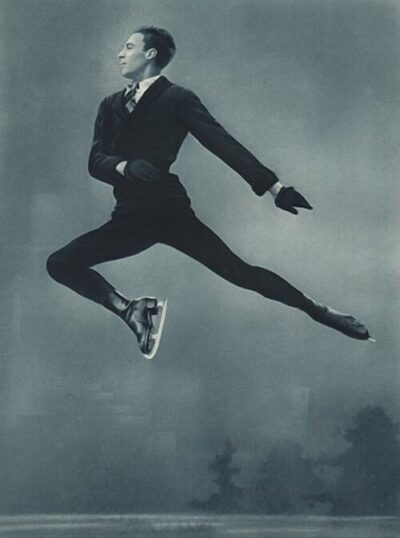
Karl Schäfer
Karl Schäfer was an Austrian figure skater and swimmer. Born May 17, 1909, in Vienna. Died April 23, 1976, in Purkersdorf.
Facts
18 facts · 2 confirmed by two sources · 2 cited · 14 from one source
Where this comes from
Papalocal keeps its own record. It started from these sources; what each one said is kept here as it was copied, so a change on their side never changes this page by itself. Tap one to read its version.
What Wikidata says · copied November 17, 2026 · revision 2564007222
- Described as
- Austrian figure skater and swimmer (1909–1976)
- Born
- May 17, 1909 · 2 references
- Died
- April 23, 1976 · 1 reference
- Born in
- Vienna
- Died in
- Purkersdorf
- Buried in
- Hernalser Friedhof
- Name at birth
- Karl Martin Alois Schäfer
- Citizen of
- Austria
- Occupation
- actor · 1 reference; film actor; figure skater; figure skating coach; swimmer · 1 reference; athlete · 1 reference
- Political party
- Nazi Party (1938–)
- Member of
- Sturmabteilung
- Sport
- figure skating; competitive swimming
- Spouse
- Christine Engelmann (1937–)
- Wikipedias with a page
- 27
Wikidata item Q551348 (wikidata.org/wiki/Q551348), public domain (CC0). Copied November 17, 2026.
What Wikipedia says · copied November 17, 2026 · revision 1385163458
Karl Schäfer (17 May 1909 – 23 April 1976) was an Austrian figure skater and swimmer. In figure skating, he became a two-time Olympic champion at the 1932 Winter Olympics and the 1936 Winter Olympics. He was also a seven-time World champion (1930–1936) and eight-time European champion (1929–1936). As a swimmer, he competed at the 1928 Summer Olympics in the 200 metre breaststroke.
- Born, in its opening lines
- May 17, 1909
- Died, in its opening lines
- April 23, 1976
From the Wikipedia article “Karl Schäfer (figure skater)” (en.wikipedia.org/wiki/Karl_Schäfer_(figure_skater)), by its contributors, under CC BY-SA 4.0 (creativecommons.org/licenses/by-sa/4.0/). Copied November 17, 2026; not changed.
Confirmed Two sources agree. Cited One source, and it names where it got it. One source One source, without a reference of its own. Sources disagree The sources disagree. We show the best-supported value and keep theirs below.
