
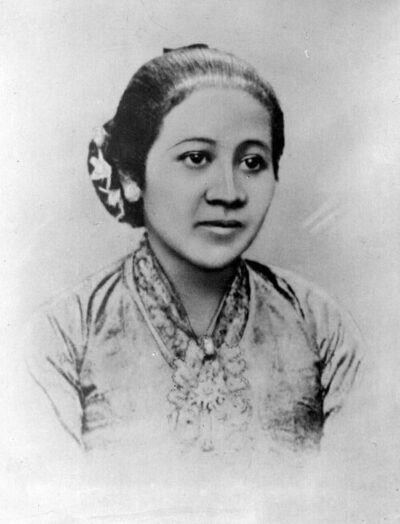
Kartini
Kartini was an Indonesian heroine, feminist. Born April 21, 1879, in Jepara. Died September 17, 1904, in Rembang. Known for Letters of a Javanese Princess. Awards include National Hero of Indonesia.
Facts
15 facts · 2 confirmed by two sources · 6 cited · 6 from one source · 1 where the sources disagree
What’s different
- Born in: we show Jepara (Sources disagree). Wikidata also lists East Java
Where this comes from
Papalocal keeps its own record. It started from these sources; what each one said is kept here as it was copied, so a change on their side never changes this page by itself. Tap one to read its version.
What Wikidata says · copied November 16, 2026 · revision 2567119600
- Described as
- Indonesian heroine, feminist (1879–1904)
- Other names
- Raden Adjeng Kartini, R.A. Kartini, Raden Ayu Adiningrat, R.A.Kartini Djojo Adhiningrat, Raden Ajeng Kartini, Kanjeng Raden Ayu Adipati Djojo Hadiningrat,, RA. Kartini
- Born
- April 21, 1879 · 9 references
- Died
- September 17, 1904 · 5 references
- Born in
- Jepara; East Java
- Died in
- Rembang
- Cause of death
- puerperal disorders
- Citizen of
- Dutch East Indies · 1 reference
- Occupation
- women's rights activist · 1 reference; textile artist · 1 reference
- Known for
- Letters of a Javanese Princess
- Awards
- National Hero of Indonesia (1964–) · 1 reference
- Children
- Soesalit Djojoadhiningrat · 1 reference
- Father
- Raden Mas Adipati Ario Sosroningrat · 1 reference
- Mother
- Mas Ayu Ngasirah · 1 reference
- Religion
- Islam
- Height
- 1.60 m (5 ft 3 in) · 1 reference
- Wikipedias with a page
- 50
Wikidata item Q1373764 (wikidata.org/wiki/Q1373764), public domain (CC0). Copied November 16, 2026.
What Wikipedia says · copied November 16, 2026 · revision 1384008331
Raden Adjeng Kartini, also known as Raden Ayu Kartini (21 April 1879 – 17 September 1904), was a prominent Indonesian advocate of women's rights and female education.
She was born into an aristocratic Javanese family in the Dutch East Indies (present-day Indonesia). After attending a Dutch-language primary school, she wanted to pursue further education, but Javanese women at the time were barred from higher education. Instead, Kartini entered a period of seclusion mandated for teenage girls until they married. She acquired knowledge by reading books and by corresponding with Indonesian and Dutch people. Her father allowed her to go into the community beginning in 1896, although she remained an unmarried single woman. She opposed the Purdah-like seclusion of teenage girls and polygamy.
She met various officials and influential people, including J.H. Abendanon. She began the tradition amongst three of her sisters to found and operate schools. After she died, schools were established by a foundation founded in the Netherlands. Some of her Indonesian friends also established Kartini Schools.
After her death, her sisters continued her advocacy of educating girls and women. Kartini's letters were published in a Dutch magazine and eventually, in 1911, as the works: Door Duisternis tot Licht (From Dark Comes Light) and an English version, Letters of a Javanese Princess.
In 1964, Kartini was declared as a National Hero of Indonesia, and her birthday is now celebrated in Indonesia as Kartini Day in her honor.
- Born, in its opening lines
- April 21, 1879
- Died, in its opening lines
- September 17, 1904
From the Wikipedia article “Kartini” (en.wikipedia.org/wiki/Kartini), by its contributors, under CC BY-SA 4.0 (creativecommons.org/licenses/by-sa/4.0/). Copied November 16, 2026; not changed.
Confirmed Two sources agree. Cited One source, and it names where it got it. One source One source, without a reference of its own. Sources disagree The sources disagree. We show the best-supported value and keep theirs below.
