
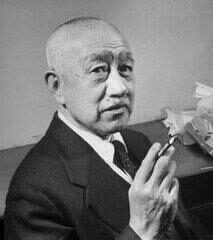
Kenji Doihara
Kenji Doihara was a Japanese general. Born August 8, 1883, in Okayama. Died December 23, 1948, in Sugamo Prison. Educated at Army War College and Imperial Japanese Army Academy. Awards include Order of the Rising Sun, Order of the Golden Kite and Order of the Sacred Treasure.
Facts
21 facts · 2 confirmed by two sources · 1 cited · 18 from one source
Where this comes from
Papalocal keeps its own record. It started from these sources; what each one said is kept here as it was copied, so a change on their side never changes this page by itself. Tap one to read its version.
What Wikidata says · copied November 17, 2026 · revision 2569195872
- Described as
- Japanese general (1883–1948)
- Other names
- Doihara Kenji, Lawrence of Manchuria
- Born
- August 8, 1883 · 1 reference
- Died
- December 23, 1948 · 1 reference
- Born in
- Okayama · 1 reference
- Died in
- Sugamo Prison
- Cause of death
- hanging to death
- Citizen of
- Japan; Empire of Japan (–1947)
- Occupation
- military personnel
- Education
- Army War College · 1 reference; Imperial Japanese Army Academy; Central Military Preparatory School; Sendai Military Preparatory School
- Awards
- Order of the Rising Sun; Order of the Golden Kite; Order of the Sacred Treasure; Taishō Enthronement Commemorative Medal · 1 reference; Inter-Allied Victory Medal · 1 reference; Showa Enthronement Commemorative Medal · 1 reference; 2600th National Anniversary Commemorative Medal · 1 reference
- Military branch
- Imperial Japanese Army
- Military rank
- general
- Wikipedias with a page
- 25
Wikidata item Q74296 (wikidata.org/wiki/Q74296), public domain (CC0). Copied November 17, 2026.
What Wikipedia says · copied November 17, 2026 · revision 1379815264
Kenji Doihara (土肥原 賢二, Doihara Kenji; 8 August 1883 – 23 December 1948) was a Japanese general and intelligence officer. He was instrumental in the Japanese invasion of Manchuria and the establishment of Manchukuo.
Born in Okayama Prefecture, Doihara became an officer in the Imperial Japanese Army and was involved in intelligence and political operations on the Chinese continent. In 1931, he was involved in the Mukden Incident, and was responsible for bringing the former Chinese Emperor Puyi to Manchuria, in order to install him as the nominal ruler of Manchukuo. Doihara continued to work to expand Japanese influence in China throughout the 1930s.
He held a number of senior military positions during the Second Sino-Japanese War and the Pacific War. After the surrender of Japan, he was convicted of war crimes by the International Military Tribunal for the Far East, sentenced to death, and hanged in December 1948.
- Born, in its opening lines
- August 8, 1883
- Died, in its opening lines
- December 23, 1948
From the Wikipedia article “Kenji Doihara” (en.wikipedia.org/wiki/Kenji_Doihara), by its contributors, under CC BY-SA 4.0 (creativecommons.org/licenses/by-sa/4.0/). Copied November 17, 2026; not changed.
Confirmed Two sources agree. Cited One source, and it names where it got it. One source One source, without a reference of its own. Sources disagree The sources disagree. We show the best-supported value and keep theirs below.
