
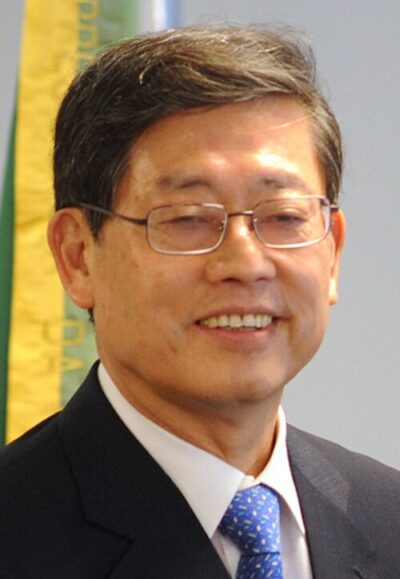
Kim Hwang-sik
Kim Hwang-sik is a South Korean lawyer and politician. Born August 9, 1948, in Jangseong County. Positions held include Prime Minister of South Korea (2010–2013) and Head of the Board of Audit and Inspection (2008–2010). Educated at University of Marburg and Seoul National University.
Facts
12 facts · 1 confirmed by two sources · 3 cited · 8 from one source
Where this comes from
Papalocal keeps its own record. It started from these sources; what each one said is kept here as it was copied, so a change on their side never changes this page by itself. Tap one to read its version.
What Wikidata says · copied November 16, 2026 · revision 2568887314
- Described as
- South Korean lawyer and politician
- Born
- August 9, 1948 · 1 reference
- Born in
- Jangseong County
- Citizen of
- South Korea
- Occupation
- politician · 1 reference; lawyer; judge · 1 reference; head of government · 1 reference
- Positions held
- Prime Minister of South Korea (2010–2013) · 1 reference; Head of the Board of Audit and Inspection (2008–2010)
- Political party
- independent politician · 1 reference
- Education
- University of Marburg; Seoul National University
- Wikipedias with a page
- 28
Wikidata item Q47529 (wikidata.org/wiki/Q47529), public domain (CC0). Copied November 16, 2026.
What Wikipedia says · copied November 16, 2026 · revision 1378403368
Kim Hwang-sik (Korean: 김황식; Hanja: 金滉植; born 9 August 1948) is a South Korean lawyer and politician who served as the prime minister of South Korea from October 2010 to February 2013 under President Lee Myung-bak. He was the former Chairperson of the Board of Audit and Inspection (BAI). He was the only member in the Lee Myung-bak Government who came from the liberal Honam Region.
- Born, in its opening lines
- August 9, 1948
From the Wikipedia article “Kim Hwang-sik” (en.wikipedia.org/wiki/Kim_Hwang-sik), by its contributors, under CC BY-SA 4.0 (creativecommons.org/licenses/by-sa/4.0/). Copied November 16, 2026; not changed.
Confirmed Two sources agree. Cited One source, and it names where it got it. One source One source, without a reference of its own. Sources disagree The sources disagree. We show the best-supported value and keep theirs below.
