
Leo Phokas the Elder
Leo Phokas the Elder was a Byzantine general. Born 9th century, in Cappadocia. Died 10th century, in Constantinople. Positions held include Domestic of the Schools.
Facts
10 facts · 0 confirmed by two sources · 0 cited · 10 from one source
Where this comes from
Papalocal keeps its own record. It started from these sources; what each one said is kept here as it was copied, so a change on their side never changes this page by itself. Tap one to read its version.
What Wikidata says · copied November 18, 2026 · revision 2554174821
- Described as
- Byzantine general
- Born
- 9th century · 1 reference
- Died
- 10th century · 1 reference
- Born in
- Cappadocia
- Died in
- Constantinople
- Citizen of
- Byzantine Empire
- Occupation
- military personnel
- Positions held
- Domestic of the Schools
- Father
- Nikephoros Phokas the Elder
- Siblings
- Bardas Phokas the Elder
- Religion
- Eastern Orthodox Church
- Wikipedias with a page
- 21
Wikidata item Q1281522 (wikidata.org/wiki/Q1281522), public domain (CC0). Copied November 18, 2026.
What Wikipedia says · copied November 18, 2026 · revision 1379865344
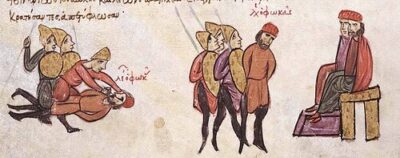
Leo Phokas (Greek: Λέων Φωκᾶς, fl. 910s) was an early 10th-century Byzantine general of the noble Phokas clan. As Domestic of the Schools, the Byzantine army's commander-in-chief, he led a large-scale campaign against the Bulgarians in 917, but was heavily defeated at the battles of Acheloos and Katasyrtai. He then plotted to seize the throne from the young Byzantine emperor Constantine VII (r. 913–959), but was outmaneuvered by the admiral Romanos Lekapenos, who managed to become guardian and later father-in-law of the Emperor. After Lekapenos seized control of the Byzantine Empire, Leo led an unsuccessful revolt, and was captured and blinded.
From the Wikipedia article “Leo Phokas the Elder” (en.wikipedia.org/wiki/Leo_Phokas_the_Elder), by its contributors, under CC BY-SA 4.0 (creativecommons.org/licenses/by-sa/4.0/). Copied November 18, 2026; not changed.
Confirmed Two sources agree. Cited One source, and it names where it got it. One source One source, without a reference of its own. Sources disagree The sources disagree. We show the best-supported value and keep theirs below.
